
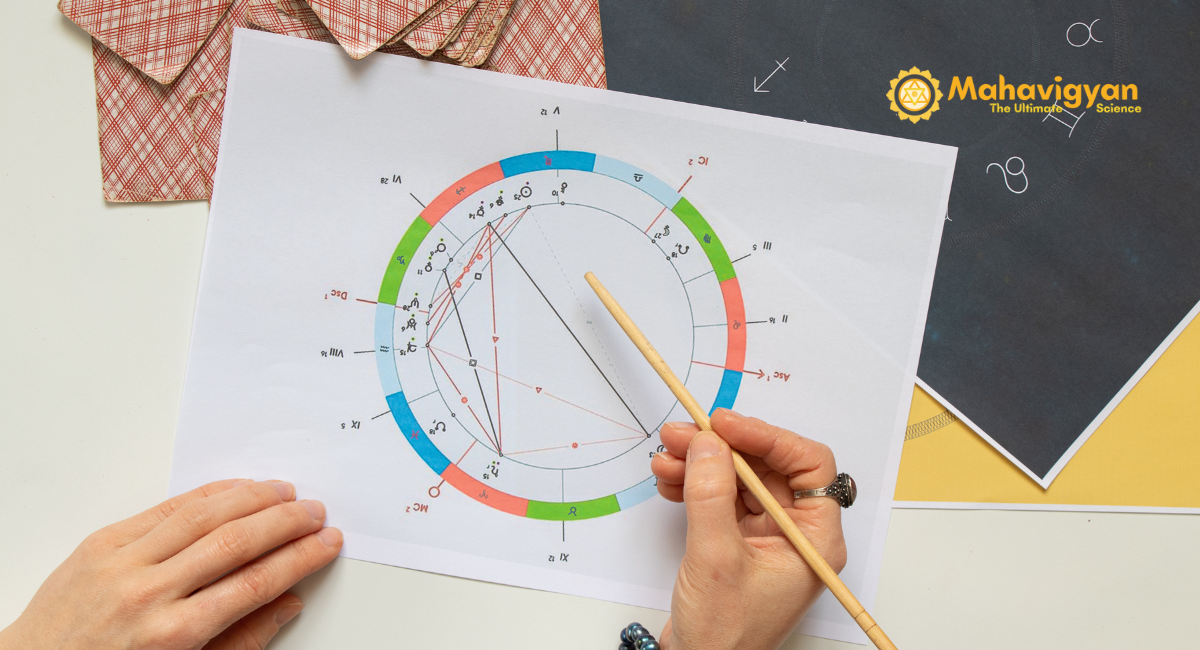
Astrology has been an integral part of Indian tradition for centuries. Whether it’s for marriage matching, career guidance, or understanding one’s life path, the Kundli or birth chart plays a central role. A Kundli reveals how the positions of celestial bodies at your birth influence your personality, relationships, and destiny.
If you’ve ever wondered, “How do I read my Kundli?” — this complete beginner’s guide will walk you through every essential step, from understanding basic planetary positions to interpreting houses and yogas. By the end, you’ll have a clear idea of how to analyze your own horoscope like a pro astrologer.
What is a Kundli (Birth Chart)?

A Kundli, also known as a Janam Patrika or Natal Chart, is a diagram representing the positions of the Sun, Moon, planets, and other celestial points at the exact time and place of your birth.
It serves as a cosmic map that helps astrologers decode your personality, strengths, weaknesses, career, relationships, and future events.
Your Kundli is divided into 12 houses, each representing different areas of life — like wealth, health, career, marriage, and spirituality. The positions of planets in these houses and zodiac signs form the foundation of Vedic astrology.
Basic Elements of a Kundli

Before learning how to read your Kundli, it’s crucial to understand its main components:
1. Lagna (Ascendant or Rising Sign)
- The Lagna represents the zodiac sign rising on the eastern horizon at your birth time.
- It defines your physical appearance, nature, and approach to life.
- The Lagna is the starting point of your Kundli — the first house begins here.
2. Planets (Grahas)
In Vedic astrology, there are nine planets that influence your life:
- Sun (Surya) – Represents soul, authority, and vitality.
- Moon (Chandra) – Reflects emotions, mind, and peace.
- Mars (Mangal) – Symbolizes energy, courage, and aggression.
- Mercury (Budh) – Governs intellect, communication, and logic.
- Jupiter (Guru) – Stands for wisdom, education, and spirituality.
- Venus (Shukra) – Relates to love, beauty, and luxury.
- Saturn (Shani) – Denotes discipline, struggle, and patience.
- Rahu – A shadow planet influencing desires and obsessions.
- Ketu – Represents detachment and spiritual enlightenment.
3. Zodiac Signs (Rashis)
There are 12 zodiac signs, each governing one house in the Kundli:
- Aries (Mesha)
- Taurus (Vrishabha)
- Gemini (Mithun)
- Cancer (Karka)
- Leo (Simha)
- Virgo (Kanya)
- Libra (Tula)
- Scorpio (Vrishchik)
- Sagittarius (Dhanu)
- Capricorn (Makar)
- Aquarius (Kumbh)
- Pisces (Meen)

Each sign has unique traits and governs specific parts of your personality and life.
4. Houses (Bhavas)
A Kundli is divided into 12 houses, each representing different life aspects:
- First House (Lagna Bhava): Self, body, personality.
- Second House: Wealth, speech, family.
- Third House: Courage, siblings, communication.
- Fourth House: Home, mother, comfort.
- Fifth House: Education, creativity, children.
- Sixth House: Health, enemies, debts.
- Seventh House: Marriage, partnerships.
- Eighth House: Longevity, mysteries, transformations.
- Ninth House: Fortune, religion, father.
- Tenth House: Career, profession, fame.
- Eleventh House: Gains, income, friends.
- Twelfth House: Expenses, foreign travel, spirituality.
How to Read Your Kundli Step-by-Step
Here’s a simple process to decode your birth chart easily:
Step 1: Identify Your Ascendant (Lagna)
Locate the number written in the first house of your Kundli. This number represents your ascendant sign.
For example:
- If the number is 1, your ascendant is Aries (Mesha).
- If it’s 7, then it’s Libra (Tula).
The Lagna defines your core personality and acts as the base for interpreting other houses.
Step 2: Understand the Planetary Positions
Each planet will be placed in a particular house and zodiac sign.
For instance, if Venus is in the 7th house, it indicates romantic nature, love for beauty, and a harmonious marriage life.
Check where each planet is positioned:
- A strong planet in a favorable sign (like Jupiter in Sagittarius) brings positivity.
- A weak or debilitated planet (like Moon in Scorpio) may cause emotional instability.
Step 3: Analyze the Houses
After locating the planets, interpret their impact on each house:
- Planet + House = Event or Trait
- Sign + Planet + House = Complete Interpretation
Example:
If Mars is in the 10th house (career) and in Capricorn (its exalted sign), it indicates leadership, success, and hard work.
Step 4: Study Planetary Aspects (Drishti)
Planets cast their aspects (influences) on other houses:
- Sun, Moon, Mercury, and Venus aspect the 7th house from their position.
- Mars aspects the 4th, 7th, and 8th houses.
- Jupiter aspects the 5th, 7th, and 9th houses.
- Saturn aspects the 3rd, 7th, and 10th houses.
Aspects reveal interactions between houses and planets — for example, Jupiter’s aspect on the 9th house enhances luck and wisdom.
Step 5: Check for Yogas and Doshas
Yogas are special planetary combinations that produce unique results:
- Gajakesari Yoga: Jupiter and Moon in mutual aspect — gives intelligence and fame.
- Budha-Aditya Yoga: Sun and Mercury together — indicates intellect and eloquence.
- Raj Yoga: Association of Kendra (1,4,7,10) and Trikona (1,5,9) lords — brings prosperity.
On the other hand, Doshas indicate challenges:
- Mangal Dosha: Mars in certain houses (1, 4, 7, 8, 12) — affects marriage compatibility.
- Kaal Sarp Dosha: All planets trapped between Rahu and Ketu — creates ups and downs in life.
- Pitra Dosha: Associated with ancestral karmic debts.
Step 6: Examine the Moon Sign
Your Moon sign (Rashi) reflects your emotional nature, instincts, and daily behavior.
Unlike the ascendant, which changes every two hours, the Moon sign stays in one sign for about 2.5 days.
If your Moon is in Cancer, you’re sensitive and family-oriented. If in Aries, you’re assertive and passionate.
Step 7: Study Dasha (Planetary Periods)
The Vimshottari Dasha system is crucial in Vedic astrology. It shows which planet’s influence dominates a particular phase of your life.
For example:
- Sun Dasha (6 years): Focus on authority and ego.
- Venus Dasha (20 years): Brings love, art, and wealth.
- Saturn Dasha (19 years): Tests patience and discipline.
Knowing your current Dasha helps predict life events, successes, and challenges.
Step 8: Consider Transits (Gochar)
Planetary transits are the real-time movements of planets. They continuously interact with your natal planets and houses, triggering events in specific periods.
For instance:
- Saturn’s transit over the Moon sign is known as Sade Sati — a 7.5-year challenging phase that promotes maturity.
- Jupiter’s transit often brings opportunities and growth.
Practical Example: Reading a Sample Kundli
Let’s take a quick example for clarity.
Suppose:
- Ascendant (Lagna): Leo
- Moon Sign: Taurus
- Sun in 5th House (Sagittarius)
- Jupiter in 7th House (Aquarius)
- Venus in 4th House (Scorpio)
Interpretation:
- Leo Lagna: Bold, confident, leadership qualities.
- Sun in 5th House: Creative and strong in education.
- Jupiter in 7th: Good for marriage and partnerships.
- Venus in 4th: Luxurious home, love for comfort.
The person is likely artistic, prosperous, and spiritually inclined.
Common Mistakes Beginners Make
- Ignoring the Lagna: It’s the foundation of the entire chart.
- Confusing Moon Sign with Sun Sign: In Vedic astrology, Moon sign is more important.
- Overanalyzing One Planet: Always study the overall planetary combination.
- Not Considering Dasha Periods: Dasha reveals when results manifest.
- Depending Only on Software Reports: Manual understanding gives deeper insights.
Benefits of Learning to Read Your Kundli
- Self-Awareness: Know your natural talents, emotions, and behavior patterns.
- Career Guidance: Choose professions aligned with your strengths.
- Relationship Insights: Understand compatibility and marital harmony.
- Health Awareness: Identify vulnerable periods and take preventive care.
- Spiritual Growth: Discover karmic lessons and soul purpose.
Tips for Beginners
- Start by focusing on Ascendant, Moon, and Sun signs.
- Learn the basic qualities of planets and signs.
- Gradually explore house meanings and aspects.
- Use simple language interpretations first — avoid complex yogas initially.
- Keep practicing with real-life charts to strengthen intuition.
Modern Relevance of Kundli Reading
In today’s fast-paced life, astrology isn’t just about predicting the future — it’s a tool for self-discovery and decision-making.
Whether it’s choosing a career, investing in business, or planning a relationship, your Kundli acts like a cosmic GPS, guiding you toward balance and purpose.
With online tools and free horoscope generators available, anyone can create their Kundli within minutes. However, understanding it still requires basic astrological knowledge, which this guide helps you build.
Conclusion
Reading your Kundli may seem complicated at first, but once you understand the houses, planets, signs, and aspects, the chart starts revealing fascinating insights about your life journey.
Your birth chart is like a mirror — reflecting your strengths, challenges, and destiny. It doesn’t bind your future but helps you align your actions with cosmic energies for better outcomes.
So, if you’ve always been curious about astrology, start today! Analyze your chart, observe how life events match planetary movements, and soon, you’ll unlock the secrets written in the stars — your Kundli.