


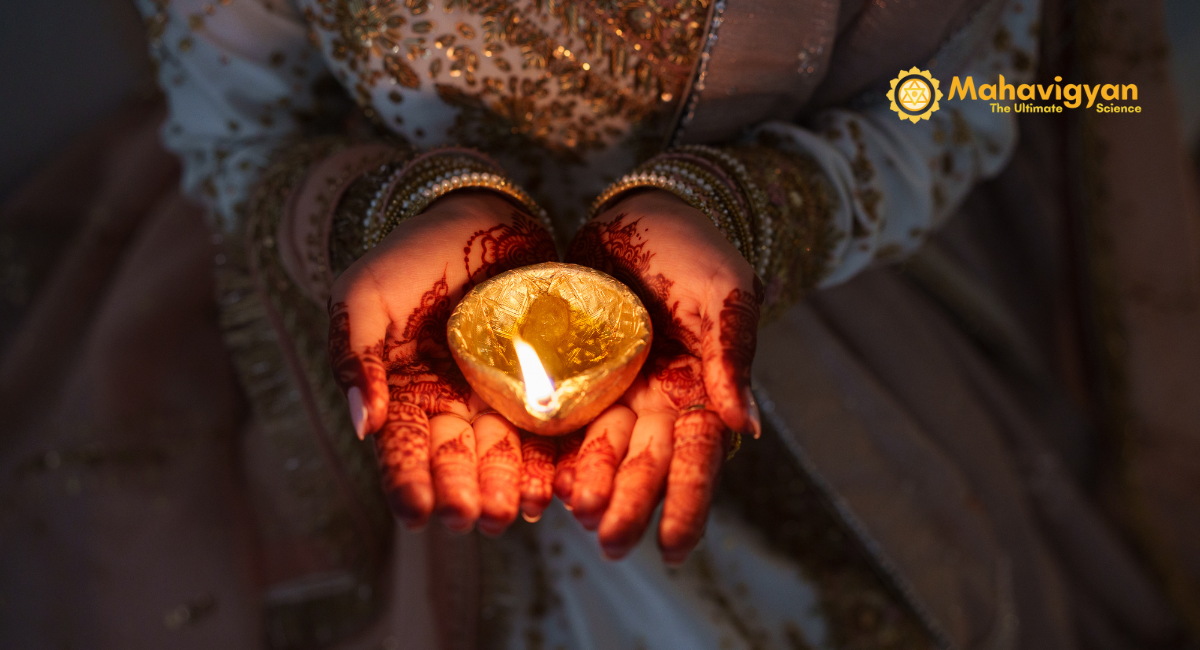
Lighting a diya or oil lamp has been a sacred tradition in Indian culture for thousands of years. Whether during festivals like Diwali, in temples, or at home every morning and evening, the act of lighting a diya holds deep spiritual meaning. Beyond being a ritual, it carries profound Vedic significance—symbolizing the victory of light over darkness, knowledge over ignorance, and positivity over negativity.
According to ancient Vedic scriptures, light is not just a physical phenomenon; it’s a divine element that purifies the environment, mind, and soul. In this article, we explore why lighting a diya brings positive energy, its Vedic explanations, scientific logic, and spiritual benefits that continue to make this practice relevant in modern life.
1. The Symbolism of Light in Vedic Philosophy

In the Vedas, light (Jyoti) represents knowledge, consciousness, and divinity. The Rigveda refers to light as the manifestation of the supreme truth — “Tamaso ma jyotir gamaya” — meaning “Lead me from darkness to light.” This light is both internal and external.
When we light a diya, we are not merely illuminating space; we are invoking the light of wisdom within ourselves. The flame of the diya symbolizes the Atman (soul), the eternal consciousness that remains pure and bright despite the challenges of worldly life.
Vedic Symbolism of the Diya:
- Oil or Ghee: Represents the ego and negative tendencies that fuel our existence.
- Wick: Represents the intellect or inner mind that guides us.
- Flame: Represents spiritual knowledge that dispels ignorance.
- Lighting the Diya: Represents the act of igniting divine awareness and self-realization.
Thus, lighting a diya is a reminder that we must keep the flame of wisdom alive within us and spread light wherever we go.
2. Vedic Explanation: The Five Elements and Energy Flow
According to Vedic cosmology, the entire universe is composed of five fundamental elements — earth (Prithvi), water (Jal), fire (Agni), air (Vayu), and space (Aakash). Each of these elements has a role in maintaining balance and harmony in nature.
When you light a diya, it engages all five elements:
- The clay of the diya represents Prithvi (earth).
- The oil or ghee represents Jal (water).
- The flame represents Agni (fire).
- The air that sustains the flame represents Vayu (air).
- The light emitted represents Aakash (space).
When all these elements unite, they create a harmonious vibration that purifies the environment. The diya thus becomes a cosmic connector, channeling universal energy into the surrounding space.
In the Vedic view, fire (Agni) is not only a physical element but a divine messenger—a bridge between the human and spiritual realms. Lighting a diya is like offering our intentions and prayers to the higher cosmic forces.
3. The Spiritual Science Behind Lighting a Diya
The Vedas teach that the universe is made up of energy — Prana Shakti — and that light is one of its purest forms. The flame of a diya emits subtle vibrations that interact with this universal energy.
Here’s how lighting a diya promotes positive energy according to spiritual science:
a. Cleanses Negative Vibrations
Negative energies are said to accumulate in dark or closed spaces. Light represents purity and motion, while darkness represents inertia and stagnation. By lighting a diya, we introduce vibrational energy that drives away negativity and activates positive cosmic frequencies in our surroundings.
b. Activates Divine Energy Centers
The act of lighting a diya daily during morning or evening prayers aligns our chakra system—especially the Ajna (third eye) and Anahata (heart) chakras. The gentle flame stimulates these energy centers, enhancing focus, intuition, and emotional balance.
c. Strengthens Spiritual Connection
According to Vedic tradition, fire is considered the mouth of the gods (Deva Mukha). Offering light to deities through a diya invokes divine blessings, creating a sacred bridge between the devotee and the divine.
d. Balances the Aura
The warm glow of the diya not only purifies the physical space but also helps to cleanse and strengthen the human aura, the subtle energy field surrounding the body. This enhances inner peace, positivity, and protection from negative influences.
4. Lighting a Diya: Morning vs Evening Energy Effects
The Vedas recommend lighting diyas during Brahma Muhurta (early morning) and Sandhya (evening twilight)—the transitional times when cosmic energy shifts between day and night.
Morning Diya (Pratah Sandhya):
Lighting a diya in the morning invites solar energy, representing new beginnings, vitality, and inspiration. It awakens the consciousness and fills the home with Sattva Guna (purity and balance).
Evening Diya (Sayam Sandhya):
As the sun sets, the energy of the environment becomes dominated by Rajas and Tamas (activity and inertia). Lighting a diya at this time helps counter darkness, negativity, and restlessness. The flame acts as a spiritual guard, bringing calmness and positivity to the atmosphere.
In essence, morning diyas energize while evening diyas stabilize the environment and mind.
5. Types of Diyas and Their Significance
Not all diyas are the same—each has symbolic meaning and energetic impact.
1. Clay Diya (Mittika Deepam):
Most traditional and sacred. Clay represents the earth element and absorbs negative energy. Lighting a clay diya with ghee purifies the environment deeply.
2. Brass or Copper Diya:
These metals conduct and radiate energy effectively. Brass diyas are often used in temples as they enhance Agni tattva (fire element) vibrations.
3. Panchmukhi Diya (Five-Wick Lamp):
Represents the five elements and the five forms of divine energy. Lighting it during rituals or meditation brings balance and spiritual elevation.
4. Ghee vs Oil Diya:
- Ghee diya emits positive Sattvik vibrations and is used for invoking divine blessings.
- Oil diya (with mustard or sesame oil) helps in removing negativity and cleansing spaces.
6. Vedic Rituals Associated with Lighting a Diya
The Vedas describe Deepa Seva or Deepa Daan—the ritual of offering light—as one of the highest forms of spiritual practice.
Before Lighting the Diya:
One should bathe, wear clean clothes, and sit facing east (morning) or north (evening). Chanting a simple mantra such as “Om Deepa Jyoti Namostute” invokes divine blessings.
During Lighting:
The flame should be steady and calm, symbolizing a peaceful mind. One may focus on the flame during meditation to attain clarity and concentration.
After Lighting:
The diya should never be extinguished by blowing air; it should naturally fade or be put out using flower petals or fingers with devotion.
According to Vastu Shastra, lighting a diya near the home altar, main entrance, or tulsi plant brings prosperity, health, and harmony.
7. Psychological and Scientific Explanation
While Vedic texts focus on spiritual energy, modern science also supports the positive effects of lighting a diya.
a. Light and Mind Connection
The soft golden light from a diya creates a soothing environment. The flickering flame helps reduce stress and anxiety, much like candle therapy used in modern wellness practices.
b. Air Purification
Burning ghee or mustard oil releases minute negative ions that purify the air, eliminating harmful bacteria and toxins. This creates a healthier and more refreshing space.
c. Enhances Concentration
Watching a steady flame enhances focus and mindfulness. Yogis often meditate on the flame (Trataka Meditation) to increase mental clarity and control.
d. Rhythmic Stability
The steady rhythm of lighting a diya daily creates a psychological anchor—a moment of stillness and gratitude that aligns our thoughts with positive intent.
8. Energetic Benefits of Lighting a Diya at Home
When you light a diya, you invite positive vibrations that radiate through every corner of your home. Here’s how it transforms the environment:
- Removes Negative Energies: Light neutralizes the dark energies that linger in corners and shadows.
- Attracts Prosperity: According to Vastu, regular lighting of diyas attracts Lakshmi tattva (energy of wealth and abundance).
- Improves Relationships: The serene energy enhances emotional harmony and reduces conflicts.
- Boosts Health: The purification of air and the calming atmosphere improve overall well-being.
- Enhances Focus: Ideal for study rooms or meditation corners, as the light energizes the mind.
9. Lighting the Diya and Mantras: The Energy Multiplier
In Vedic tradition, mantras amplify the energy generated by rituals. Chanting mantras while lighting a diya increases the vibration and spiritual potency.
A common mantra is:
“Om Deepa Jyoti Parabrahma, Deepa Jyoti Janardana,
Deepo Haratu Me Paapam, Sandhya Deepa Namostute.”
This translates to:
“The light of the lamp represents the divine, the remover of darkness and sins. I bow to this divine light.”
The sound vibrations of these mantras combine with the light energy to create a field of peace and purity.
10. The Deeper Vedic Message: Light Within and Without
The ultimate Vedic teaching behind lighting a diya goes beyond external ritual. The flame is a symbol of inner enlightenment. Just as a lamp lights up a dark room, the light of awareness removes the darkness of ignorance.
Lighting a diya daily is a reminder to:
- Keep our thoughts pure.
- Maintain spiritual discipline.
- Share positivity and compassion.
- Strive for knowledge and truth.
When we live with light within us, we naturally radiate positive energy to the world around us.
Conclusion: Embrace the Light, Embrace Positivity
Lighting a diya is not a mere ritual—it’s a Vedic science of energy balance and spiritual awakening. The flame symbolizes divine consciousness, the ghee represents selfless devotion, and the act of lighting it connects us to cosmic harmony.
By lighting a diya daily—especially during dawn and dusk—you bring peace, prosperity, and positivity into your home and your life. In a world often clouded by stress and chaos, the simple act of lighting a diya can serve as a spiritual anchor, reminding us that light will always overcome darkness, and positivity will always prevail over negativity.
So, each time you light a diya, let it not just illuminate your surroundings but also ignite the light within your heart.