
The Bhagavad Gita, often called the “Song of God,” stands as one of the most profound and timeless spiritual texts ever written. Over the centuries, it has inspired philosophers, leaders, saints, and seekers from all walks of life. But what exactly makes the Bhagavad Gita the most quoted spiritual book in the world?
To understand this, one must explore not only its divine message but also its universal appeal, practical wisdom, and deep psychological insights that transcend time, culture, and religion. The Gita is not merely a Hindu scripture—it is a manual for life, a guide for inner peace, and a compass for anyone searching for truth.
1. The Eternal Context of the Bhagavad Gita

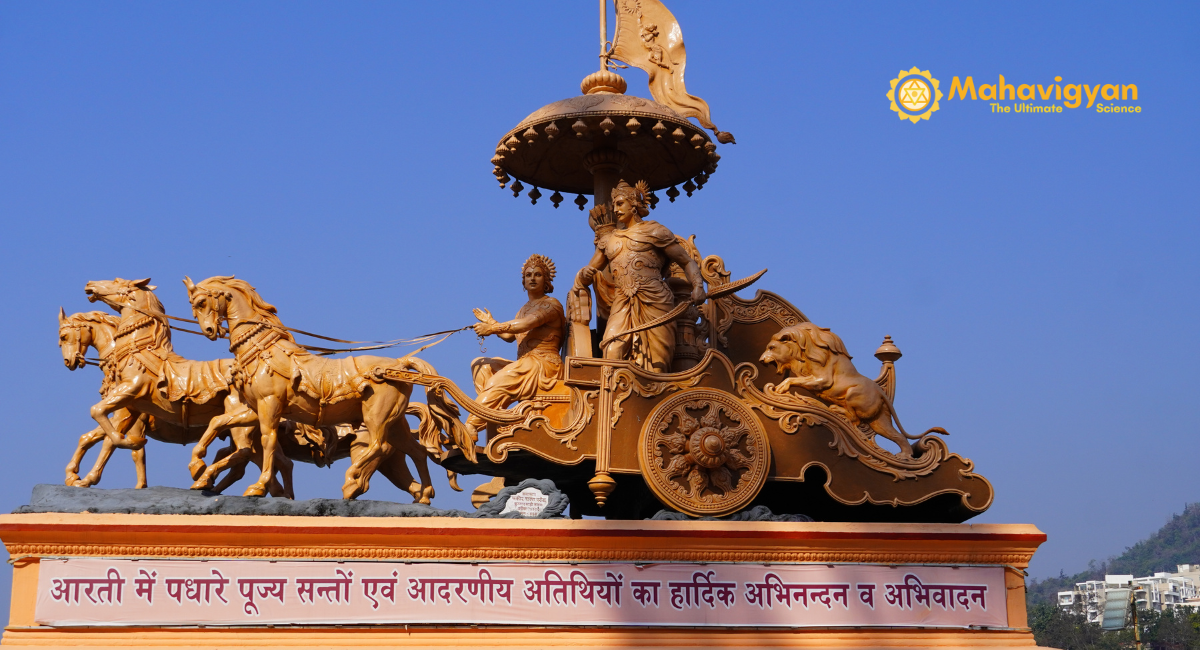
The Bhagavad Gita is a 700-verse dialogue between Lord Krishna and Prince Arjuna, taking place on the battlefield of Kurukshetra. As Arjuna stands confused and morally torn about fighting in the war, Lord Krishna reveals the ultimate truths of life, duty, action, and liberation.
This battlefield is symbolic—it represents the inner battle every human faces between right and wrong, material attachment and spiritual truth, ego and higher self. That universal setting makes it eternally relevant. Unlike scriptures bound to a particular community or period, the Gita addresses the soul’s timeless struggle.
Every generation can relate to Arjuna’s dilemma, making the Gita a book that never loses relevance. Its teachings apply to students, leaders, soldiers, spiritual aspirants, and ordinary people alike.
2. A Universal Message Beyond Religion

One of the most powerful reasons the Bhagavad Gita is so widely quoted is because it transcends religion. While it originates from the Mahabharata, a sacred Hindu epic, its teachings belong to all of humanity.
Krishna does not promote a single religious path. Instead, He speaks of Dharma (righteousness), Karma (selfless action), Jnana (knowledge), and Bhakti (devotion) as universal ways to connect with the Divine. These principles resonate with all belief systems, whether one follows Christianity, Islam, Buddhism, or any other faith.
The Gita’s wisdom focuses on truth and consciousness, not rituals or dogma. That’s why even modern scientists, psychologists, and motivational speakers quote it without religious bias. Its language of self-realization appeals equally to atheists and theists.
3. The Gita as a Guide to Inner Peace

In an age of anxiety, overthinking, and stress, the Bhagavad Gita offers timeless solutions for mental balance. When Arjuna collapses in despair, Krishna teaches him the art of mastering his mind and emotions through detachment, meditation, and right understanding.
A famous verse says:
“The mind is restless, turbulent, strong, and obstinate; but it can be controlled through practice and detachment.”
This single line summarizes what modern psychology and mindfulness research continue to explore today. The Gita teaches that peace does not come from avoiding challenges, but from facing them with wisdom and equanimity.
That practical approach to life’s difficulties makes the Gita a quoted text across therapy sessions, self-help books, and leadership seminars worldwide.
4. The Philosophy of Karma: Action Without Attachment
Perhaps the most quoted teaching from the Bhagavad Gita is about Karma Yoga—the path of selfless action.
Krishna tells Arjuna:
“You have the right to perform your duties, but not to the fruits of your actions.”
This revolutionary idea frees a person from fear, greed, and anxiety. It encourages action without selfish motives. When one works without attachment to results, one achieves both success and peace.
Leaders like Mahatma Gandhi, Swami Vivekananda, and Albert Einstein often quoted this very principle. It transforms how one approaches work, duty, and success. In the modern corporate world, this teaching is applied in management and personal productivity models under the term “work without stress.”
The law of karma—do your duty and surrender the outcome—remains the foundation of ethical action in both spiritual and practical life.
5. The Power of Self-Realization
Another key reason for the Gita’s global recognition lies in its emphasis on Self-Realization. The Gita reveals that the true self (Atman) is eternal, beyond birth and death.
“For the soul, there is neither birth nor death. It is unborn, eternal, ever-existing, and primeval.”
This teaching answers humanity’s oldest question: Who am I?
The Gita teaches that we are not the body or the mind, but the eternal consciousness that witnesses them. This understanding eliminates fear of death and leads to lasting happiness.
Such spiritual depth attracts thinkers, yogis, and scientists alike. Many Western philosophers like Emerson, Thoreau, and Schopenhauer found in the Gita a wisdom that science alone could not explain.
6. The Gita’s Psychological and Scientific Insight
Long before modern psychology was born, the Bhagavad Gita explored the human mind in astonishing detail. Krishna describes three gunas (modes of nature)—sattva (balance), rajas (activity), and tamas (inertia)—that shape one’s thoughts, behavior, and destiny.
This trinity is comparable to the modern understanding of personality traits and behavioral psychology. The Gita teaches how to balance these forces to attain mental clarity and spiritual progress.
Even in scientific circles, many scholars appreciate the Gita’s description of energy, consciousness, and transformation. The book aligns with the scientific principle that energy cannot be created or destroyed—only transformed—a concept reflected in the Gita’s view of the eternal soul.
7. The Influence on Global Thinkers
Few spiritual books have influenced as many global minds as the Bhagavad Gita. Leaders, writers, and scientists from different parts of the world have drawn inspiration from it.
- Mahatma Gandhi called it his “spiritual dictionary.”
- Aldous Huxley described it as “the most systematic statement of spiritual evolution.”
- Albert Einstein said that when he read the Gita, it answered questions that science could not.
- Carl Jung and Hermann Hesse found in it deep psychological truths about the human condition.
The Gita’s universality makes it quoted not just in temples but in universities, corporate boardrooms, and political speeches.
8. The Balance Between Spirituality and Worldly Life
Unlike many spiritual books that advocate renunciation, the Bhagavad Gita teaches balance. Krishna never tells Arjuna to abandon the world. Instead, He urges him to perform his duty as a warrior but with detachment and devotion.
This blend of spirituality and practicality is what makes the Gita unique. It doesn’t ask you to run away from responsibilities; it teaches you how to perform them with awareness. That makes it especially appealing to modern professionals who seek success without stress.
The Gita’s message: Live in the world, but don’t be of the world.
9. The Power of Simplicity and Depth
Another reason the Bhagavad Gita is so quoted is its remarkable simplicity. Despite dealing with the deepest spiritual truths, it uses clear, poetic language. Each verse is concise yet layered with meaning.
One can read a single verse in a few seconds—or meditate on it for a lifetime. This flexibility makes it accessible to all: scholars, saints, and even ordinary people seeking peace.
The Gita’s verses serve as motivational quotes, meditation mantras, and life lessons—all at once. That’s why they appear everywhere—from social media posts to leadership manuals and meditation guides.
10. The Gita’s Relevance in the Modern World
In today’s digital, fast-paced, and often chaotic world, people face inner conflicts similar to Arjuna’s. Stress, moral confusion, and the search for purpose dominate modern life.
The Gita provides timeless answers:
- How to act without anxiety
- How to find meaning in work
- How to control desires and emotions
- How to stay peaceful amidst chaos
These solutions make the Gita a global guidebook for inner well-being. From Silicon Valley executives to yoga practitioners, millions quote the Gita’s verses as affirmations of focus, detachment, and faith.
11. A Source of Inspiration Across Cultures
The Bhagavad Gita is not confined to India. It has been translated into over 75 languages and is read by millions worldwide. Its teachings have inspired movements like Transcendental Meditation, Yoga, and Mindfulness.
In universities across the world, the Gita is studied not only as a religious text but as a masterpiece of philosophy and ethics. Its influence on literature, psychology, and even modern management proves its universality.
It speaks a language of unity—teaching that all paths lead to the same truth. That inclusive spirit makes it a bridge between cultures and religions.
12. The Power of Faith and Devotion
While the Gita emphasizes knowledge and action, its heart lies in Bhakti Yoga—the path of devotion. Krishna assures that anyone who surrenders with faith and love will attain Him, regardless of status or background.
This compassionate message—that the Divine is accessible to all—makes it deeply comforting. Devotees across the world quote these verses as reminders of divine love and protection.
Faith, when combined with wisdom, creates a complete spiritual path—and the Gita harmoniously integrates both.
13. The Gita as a Living Scripture
Unlike many ancient texts that belong to the past, the Bhagavad Gita feels alive. Its message evolves with every reader and situation. Whether one reads it during success, failure, joy, or sorrow—the verses speak differently each time.
This dynamic quality is why it continues to be quoted by millions. The Gita is not just a book—it’s a dialogue between the reader and the Divine.
14. The Essence of the Gita in One Line
If the entire Gita could be summarized in one sentence, it might be:
“Do your duty with devotion and detachment, guided by knowledge, and realize the divine Self within.”
That simple yet profound idea captures why it remains the most quoted spiritual book in the world—it offers direction, meaning, and peace to anyone who seeks it.
Conclusion: A Timeless Message for the Soul
The Bhagavad Gita endures not because it is ancient, but because it is eternally modern. Every line offers practical wisdom for life’s deepest questions. Its teachings of balance, detachment, and devotion have guided saints, scientists, and ordinary people toward peace and purpose.
From Arjuna’s confusion to humanity’s constant search for meaning, the Gita remains the ultimate dialogue of truth. That is why its verses echo through time—quoted in temples, books, speeches, and hearts across the world.
The Bhagavad Gita is not just the most quoted spiritual book—it is the most experienced one. It doesn’t preach—it transforms. It doesn’t dictate—it awakens.
And as long as humanity seeks truth, the song of the Gita will continue to be sung.