
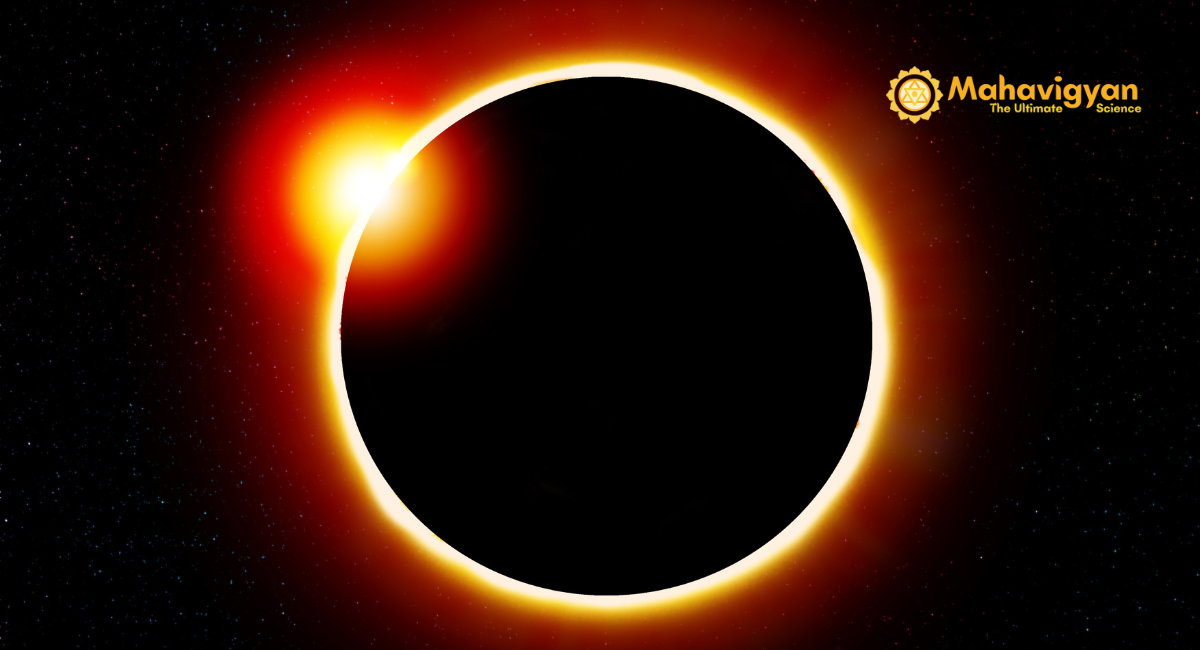
The lunar eclipse, known as Chandra Grahan in Hinduism, is not just a celestial phenomenon but a deeply spiritual and symbolic event. Unlike modern science, which views it as a simple alignment of the Earth, Sun, and Moon, Hindu scriptures interpret it as a time of profound spiritual importance. The ancient sages of India described the eclipse as a cosmic event that influences the energies of the universe, the Earth, and the human mind.
According to the Vedas, Puranas, and various Jyotish Shastras (astrological scriptures), the lunar eclipse is a period of spiritual purification, introspection, and heightened awareness. It is believed that during this time, the world experiences subtle energetic shifts that can either uplift or disrupt human consciousness. Let us explore what actually happens spiritually during a lunar eclipse according to Hindu thought.
1. The Mythological Story Behind the Lunar Eclipse
To understand the spiritual meaning of a lunar eclipse, we first turn to the Puranas. The most popular explanation comes from the story of Rahu and Ketu—the two shadow planets in Hindu astrology.
According to the Bhagavata Purana, during the churning of the cosmic ocean (Samudra Manthan), the devas (gods) and asuras (demons) came together to obtain Amrit, the nectar of immortality. Lord Vishnu, in his divine form as Mohini, distributed the nectar only to the devas. However, one asura named Swarbhanu disguised himself as a deva and sat among them to drink the nectar.
The Sun (Surya) and the Moon (Chandra) recognized him and informed Vishnu. Immediately, Lord Vishnu used his Sudarshan Chakra to behead Swarbhanu. But since he had already tasted the nectar, he did not die. His head became Rahu and his body became Ketu.

Filled with anger, Rahu and Ketu vowed to seek revenge on the Sun and Moon. From that time onward, it is said that Rahu occasionally swallows the Moon, causing a lunar eclipse. Spiritually, this myth represents the battle between truth and deception, light and shadow, knowledge and illusion.
2. Spiritual Significance of the Lunar Eclipse
The lunar eclipse is believed to be a time when cosmic energies are unstable. The Moon in Hindu philosophy represents the mind—its thoughts, emotions, and subconscious patterns. When the Moon is shadowed by Rahu or Ketu, it symbolizes the covering of the mind by illusion, negativity, or karmic confusion.
a. The Shadow on the Mind
The Moon governs our mental state. During an eclipse, this light is overshadowed, symbolizing that our clarity and emotions may be affected. Spiritually, it is seen as a time when illusions (Maya) dominate human consciousness. Hence, one is advised to avoid making major decisions, eating food, or engaging in worldly activities during this period.
b. A Time for Inner Cleansing

While the outer world is said to become energetically polluted during the eclipse, the inner world has the potential for cleansing. The scriptures say that spiritual practices done during this time yield manifold results. Chanting mantras, meditating, or reflecting upon one’s karma can bring deep purification.
c. The Eclipse as a Karmic Reset
In Jyotish Shastra, eclipses are considered “nodes of karma.” Rahu and Ketu represent past and future karmic debts. During a lunar eclipse, the veil between these karmic energies is thin, making it an ideal time to burn old karmic patterns through prayer, fasting, and self-awareness.
3. The Effect on Human Emotions and Consciousness
The Moon influences human emotions as it governs the Manas (mind). Just as the tides are affected by the Moon’s pull, so too are the emotional tides within us. Hindu astrology states that during a Chandra Grahan, the subtle vibrations of the Moon are disturbed, which can cause emotional instability or confusion.
Spiritually sensitive individuals often experience heightened intuition or anxiety during an eclipse. It is said that meditation during this time can bring deep insight, as the inner mind becomes more receptive to the unseen truths of existence. However, one must stay calm and grounded, as the mind can also be easily misled.
4. Scriptural Teachings on What to Do During a Lunar Eclipse
Hindu scriptures provide specific guidelines for behavior during an eclipse. These practices are meant not only for physical well-being but also for spiritual protection and purification.
a. Fasting (Upavasa)
It is traditionally advised to fast from a few hours before the eclipse until it ends. This helps to purify the body and mind. Fasting symbolizes detachment from the material world during a period when cosmic disturbances are at play.
b. Chanting Mantras
Chanting sacred mantras like the Maha Mrityunjaya Mantra or Gayatri Mantra during the eclipse is believed to multiply their effects thousands of times. The vibration of these mantras helps protect the aura and cleanse negative energies that may arise.
c. Meditation and Silence
Silence (Mauna) and meditation are highly recommended. As the outer world’s energy becomes dense, turning inward connects you to the eternal light within. Many spiritual seekers use this time to dissolve their ego and merge with higher consciousness.
d. Bathing Rituals
After the eclipse, bathing in sacred rivers like the Ganga or even taking a simple bath at home is prescribed. This act symbolizes washing away spiritual impurities absorbed during the event.
e. Avoiding Food and Physical Intimacy
Eating or engaging in sensual activities is discouraged. The eclipse period is said to lower the pranic energy of the food and disturb the balance of the doshas (bio-energies). It’s a time for stillness, not indulgence.
5. Energetic Changes During the Eclipse
According to Tantric and Vedic traditions, the eclipse alters the frequency of cosmic vibrations. The light of the Moon carries subtle energy that nourishes the mind and emotions. When the Moon is covered, these energies are disrupted.
In esoteric terms, the lunar eclipse is when the Chandra Nadi (the left energy channel of the body) experiences imbalance. This can bring emotional turbulence but also spiritual openings. Sages consider it a “gateway moment” — an opportunity to transcend habitual thought patterns and enter higher awareness.
Practices like Pranayama (breath control) and mantra chanting help stabilize this shifting energy. Yogis and monks often stay indoors, focusing entirely on their sadhana (spiritual discipline) during this phase.
6. The Eclipse and the Law of Purification
In Hindu cosmology, every natural event has a deeper purpose. The lunar eclipse represents the cosmic process of purification — a symbolic “burning” of impurities in the spiritual atmosphere. Just as Rahu’s shadow temporarily obscures the Moon, our ego and desires often obscure our divine nature.
When the eclipse ends and the Moon shines again, it represents spiritual rebirth — the victory of light over darkness. This is why prayers and mantras chanted during and after the eclipse are considered extremely powerful; they align one’s consciousness with the reemerging light.
7. Lunar Eclipse and Its Impact on Different Zodiac Signs
Astrologically, the lunar eclipse impacts every individual differently based on their Rashi (Moon sign). Though the specifics vary, Hindu astrology teaches that eclipses generally bring changes, revelations, and emotional transformation.
- For Aries (Mesha): A time for emotional release and self-reflection. Avoid impulsive actions.
- For Taurus (Vrishabha): Opportunities to heal relationships, but avoid arguments.
- For Gemini (Mithuna): Focus on mental peace; avoid overthinking.
- For Cancer (Karka): As the Moon rules Cancer, emotions may surge—practice meditation.
- For Leo (Simha): A reminder to let go of ego and pride; humility brings blessings.
- For Virgo (Kanya): The mind may seek control; learn to surrender.
- For Libra (Tula): Spiritual clarity and balance can be achieved through prayer.
- For Scorpio (Vrischika): Deep inner transformation; ideal time for introspection.
- For Sagittarius (Dhanu): Challenges may bring wisdom; remain patient.
- For Capricorn (Makara): Focus on stability and grounding.
- For Aquarius (Kumbha): Strong karmic lessons; forgive and move on.
- For Pisces (Meena): A deeply spiritual time; meditation can bring profound peace.
8. Scientific vs. Spiritual Viewpoint
From a scientific standpoint, a lunar eclipse occurs when the Earth comes between the Sun and the Moon, casting a shadow that blocks the Moon’s light. While science focuses on physical phenomena, Hinduism views this event through a metaphysical lens — as an interaction of cosmic forces that affect not only the physical but also the energetic and spiritual realms.
Both views can coexist. Science explains the how; spirituality explains the why. The eclipse becomes a mirror for self-reflection — a time to explore the shadow side of our mind, much like Rahu’s shadow covering the Moon.
9. What Should Be Done Spiritually After the Eclipse
When the eclipse ends, it is customary to perform Snana (ritual bath), light lamps, and offer prayers to deities like Lord Vishnu or Shiva. Donations to the poor or feeding the needy (Annadanam) is considered extremely meritorious, symbolizing renewal and divine gratitude.
Spiritually, the post-eclipse period represents restoration. As the Moon regains its light, so too should one’s inner mind regain clarity. The vibrations of purity, gratitude, and awareness help restore balance in the soul.
10. Hidden Symbolism: The Shadow and the Soul
The most profound lesson of the lunar eclipse lies in its symbolism. The shadow of Rahu covering the Moon mirrors the inner darkness of human consciousness. Just as the eclipse is temporary, so too are our fears, attachments, and ignorance.
The return of the Moon’s light reminds us that divine truth can never be permanently hidden. Every eclipse, therefore, becomes a cosmic teaching — to face our inner shadows, embrace change, and awaken to the eternal light within.
Conclusion
The lunar eclipse in Hinduism is much more than a celestial event; it is a sacred opportunity for spiritual awakening. Rooted in the myth of Rahu and Ketu, it symbolizes the eternal play of light and shadow within human consciousness.
When the Moon’s light dims, it is a reminder to look within and confront our hidden fears, karmas, and desires. The spiritual practices recommended during this time — fasting, mantra chanting, meditation, and purification — help the soul evolve toward higher awareness.
As the shadow fades and the Moon reappears, it teaches us that no darkness is everlasting. Every eclipse, whether in the sky or in our hearts, is followed by renewed light and divine grace.