
Hip pain has become increasingly common in today’s lifestyle, affecting people of all ages. Long hours of sitting, lack of physical activity, poor posture, stress, and even excessive workouts can put constant pressure on the hip joints. Over time, this leads to stiffness, reduced mobility, and chronic discomfort that interferes with daily life.
While painkillers and medical treatments may offer temporary relief, many people are now turning to natural and holistic solutions. Yoga is one such powerful practice that helps relieve hip pain by improving flexibility, strengthening muscles, enhancing blood circulation, and calming the nervous system—all without side effects.
In this comprehensive guide, you will discover the top 7 simple yoga poses to relieve hip pain naturally. These poses are beginner-friendly, safe, and effective when practiced regularly. Whether you’re dealing with mild stiffness or ongoing discomfort, this guide will help you regain comfort and mobility in a natural way.
Why Yoga Is Effective for Hip Pain Relief
The hip joint is one of the largest and most important joints in the body. It supports your body weight and enables movements such as walking, sitting, bending, and twisting. When the muscles around the hips become tight or weak, pain develops.
Yoga works holistically by:
- Stretching tight hip flexors and inner thigh muscles
- Strengthening supporting muscles like glutes and lower back
- Improving joint lubrication and flexibility
- Reducing inflammation naturally
- Enhancing posture and body alignment
- Relieving stress, which often worsens chronic pain

Unlike high-impact exercises, yoga places gentle and controlled pressure on the joints, making it ideal for people experiencing hip pain.
Who Can Benefit from These Yoga Poses?
These yoga poses are suitable for:
- Office workers with prolonged sitting habits
- Seniors experiencing stiffness and reduced mobility
- Athletes with overworked hip muscles
- People with early-stage joint discomfort
- Beginners looking for safe pain-relief exercises
Note: If you have severe injury, recent surgery, or diagnosed joint conditions, practice under guidance.
Table: Overview of the Top 7 Yoga Poses for Hip Pain Relief
| No. | Yoga Pose Name | Primary Benefit | Difficulty Level | Best For |
|---|---|---|---|---|
| 1 | Bound Angle Pose | Opens hips and groin | Beginner | Hip stiffness |
| 2 | Pigeon Pose | Deep hip stretch | Intermediate | Chronic hip tightness |
| 3 | Garland Pose | Improves hip mobility | Beginner | Sitting-related pain |
| 4 | Happy Baby Pose | Releases lower back & hips | Beginner | Tension relief |
| 5 | Bridge Pose | Strengthens hips & glutes | Beginner | Weak hip muscles |
| 6 | Lizard Pose | Deep hip flexor stretch | Intermediate | Hip flexibility |
| 7 | Supine Twist | Relaxes hips and spine | Beginner | Stress-related pain |
1. Bound Angle Pose (Baddha Konasana)

Bound Angle Pose is one of the most effective and simple yoga poses for hip pain relief. It gently opens the hips and stretches the inner thighs, making it ideal for beginners.
How to Perform:
- Sit upright on the floor with legs extended
- Bend both knees and bring the soles of your feet together
- Hold your feet with your hands
- Gently press your knees toward the floor
- Keep the spine straight and breathe deeply
Benefits:
- Relieves stiffness in hips and groin
- Improves blood circulation in the pelvic area
- Reduces discomfort caused by long sitting hours
Tips:
- Place cushions under knees if needed
- Avoid forcing the stretch
2. Pigeon Pose (Eka Pada Rajakapotasana)
Pigeon Pose provides a deep stretch to the hip flexors and glute muscles. It is highly beneficial for people suffering from chronic hip tightness.
How to Perform:
- Start in a plank position
- Bring one knee forward and place it behind your wrist
- Extend the other leg straight back
- Lower your hips and fold forward
Benefits:
- Releases deep hip tension
- Improves hip joint flexibility
- Helps reduce sciatic-related discomfort
Tips:
- Use blocks or cushions for support
- Keep movements slow and controlled
3. Garland Pose (Malasana)
Garland Pose is excellent for improving hip mobility and strengthening the lower body. It also helps counteract the effects of prolonged sitting.
How to Perform:
- Stand with feet slightly wider than hips
- Lower into a squat while keeping heels grounded
- Bring palms together at chest level
- Press elbows gently against knees
Benefits:
- Opens hips and ankles
- Improves digestion and posture
- Reduces stiffness in hip joints
Tips:
- Support heels with a folded mat if needed
- Keep chest lifted
4. Happy Baby Pose (Ananda Balasana)
This pose gently stretches the hips while relaxing the lower back and spine. It’s especially helpful after a long day.
How to Perform:
- Lie on your back
- Bring knees toward chest
- Hold the outer edges of your feet
- Gently pull knees toward the floor
Benefits:
- Releases hip tension
- Reduces lower back pain
- Promotes relaxation and stress relief
Tips:
- Rock gently side to side
- Avoid straining the neck
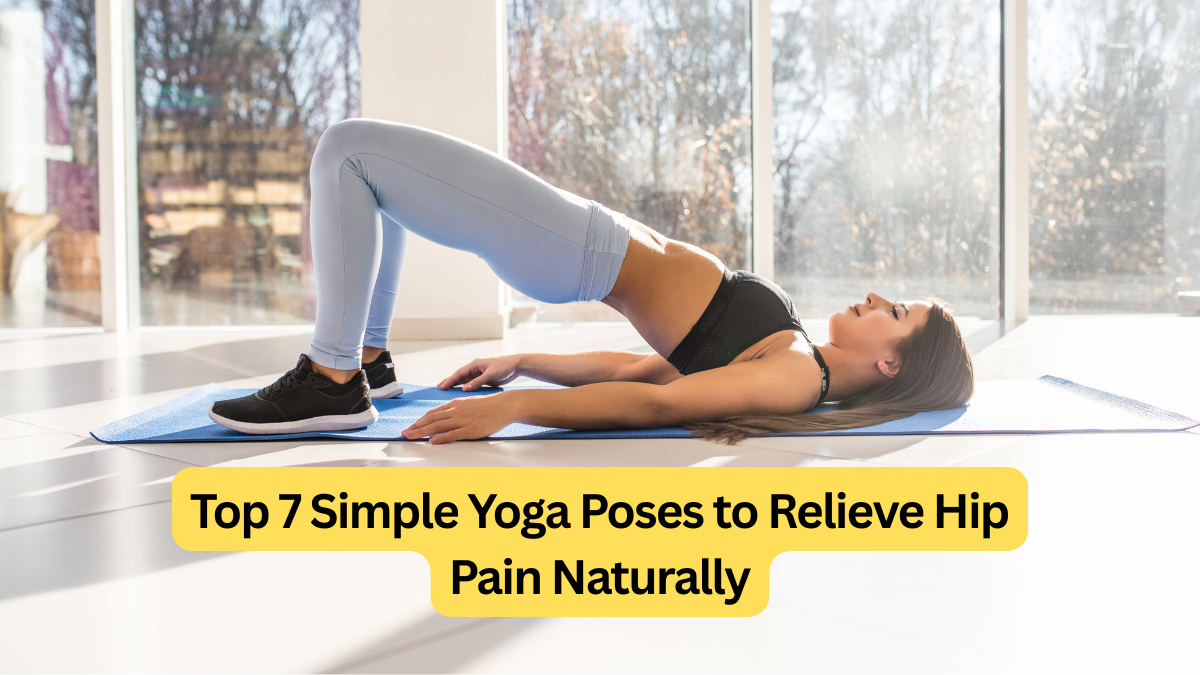
5. Bridge Pose (Setu Bandhasana)
Bridge Pose strengthens the muscles that support the hips, helping prevent future pain.
How to Perform:
- Lie on your back with knees bent
- Feet hip-width apart and flat on the floor
- Lift hips while pressing feet and arms down
- Hold for a few breaths
Benefits:
- Strengthens glutes and hip muscles
- Improves spinal alignment
- Enhances blood flow to hip joints
Tips:
- Avoid over-arching the lower back
- Keep knees aligned
6. Lizard Pose (Utthan Pristhasana)
Lizard Pose provides an intense stretch to the hip flexors and inner thighs, making it ideal for improving mobility.
How to Perform:
- Start in a low lunge position
- Bring hands inside the front foot
- Lower hips toward the mat
- Hold while breathing deeply
Benefits:
- Deeply stretches hips and groin
- Improves joint range of motion
- Helps relieve stiffness
Tips:
- Modify by keeping back knee on the floor
- Use blocks for hand support
7. Supine Spinal Twist (Supta Matsyendrasana)
This gentle twisting pose relaxes the hips while soothing the nervous system.
How to Perform:
- Lie on your back
- Bend one knee and cross it over the body
- Extend arms and turn head opposite side
- Hold and breathe
Benefits:
- Releases tension from hips and spine
- Improves flexibility
- Reduces stress-related pain
Tips:
- Keep shoulders relaxed
- Avoid forcing the twist
Best Practices for Safe Yoga Practice
To get the best results while avoiding injury:
- Warm up before starting
- Focus on breathing
- Never force a pose
- Practice consistently
- Stop if pain increases
Consistency is more important than intensity when it comes to yoga for pain relief.
How Long Does It Take to See Results?
Most people notice improvement within 2–4 weeks of regular practice. Gentle daily sessions of 20–30 minutes can significantly reduce hip pain and stiffness.
Conclusion
Hip pain doesn’t have to control your life. With the right approach, yoga offers a natural, safe, and effective way to relieve hip pain and restore mobility. The seven simple yoga poses discussed in this guide are suitable for beginners and can be practiced at home without equipment.
By practicing these poses regularly, focusing on proper breathing, and listening to your body, you can experience long-lasting relief and improved hip health naturally.
Start today, stay consistent, and let yoga bring comfort back into your movement.