
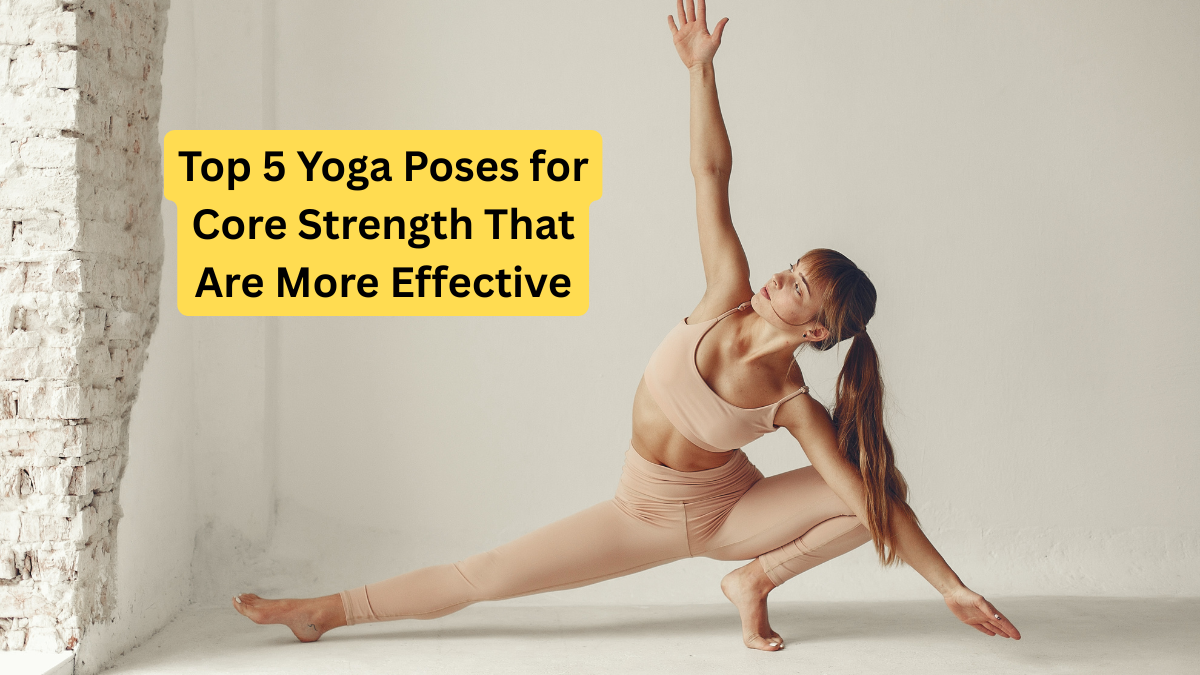
Building a strong core is no longer just about six-pack abs. A truly powerful core supports your spine, improves posture, enhances balance, boosts athletic performance, and protects you from injuries. While gym-based workouts often focus on crunches and sit-ups, yoga offers deeper, more functional core strengthening by engaging multiple muscle groups at once.
In this article, we explore the Top 5 Yoga Poses for Core Strength that are more effective, safer, and longer-lasting than traditional ab exercises. These poses activate not only the abdominal muscles but also the back, hips, shoulders, and pelvic floor—creating full-body stability.
Why Yoga Is More Effective for Core Strength
Before jumping into the poses, it’s important to understand why yoga works better for long-term core development.
Key Benefits of Yoga for Core Strength
- Engages deep core muscles, not just surface abs
- Builds functional strength instead of isolated muscle tension
- Improves balance, posture, and spinal alignment
- Reduces risk of lower back pain and injuries
- Enhances mind–muscle connection through breath control
Unlike crunches, yoga poses require sustained engagement, balance, and controlled breathing—making the core work harder and smarter.
Top 5 Yoga Poses for Core Strength (Highly Effective)
1. Boat Pose (Navasana)
Why Boat Pose Is Extremely Effective
Boat Pose is one of the most powerful yoga poses for activating the entire core system. It targets the rectus abdominis, transverse abdominis, hip flexors, and spinal stabilizers simultaneously.
How Boat Pose Strengthens the Core
- Requires isometric contraction of abdominal muscles
- Builds endurance in deep core stabilizers
- Improves balance and mental focus
How to Perform Boat Pose
- Sit on the mat with legs extended
- Lean back slightly while keeping spine straight
- Lift both legs to form a V shape
- Extend arms forward, parallel to the floor
- Hold for 20–40 seconds while breathing steadily
Common Mistakes to Avoid
- Rounding the lower back
- Holding the breath
- Locking the shoulders
Core Muscles Activated
- Upper and lower abs
- Hip flexors
- Lower back stabilizers
2. Plank Pose (Phalakasana)
Why Plank Pose Is Better Than Sit-Ups
Plank Pose engages the entire core chain, making it far more effective than repetitive crunches. It strengthens the abdomen while protecting the spine.
Benefits of Plank Pose for Core Strength
- Builds deep abdominal endurance
- Strengthens shoulders and arms
- Improves spinal alignment
- Enhances full-body coordination
How to Perform Plank Pose
- Start in a push-up position
- Keep wrists under shoulders
- Engage abs and glutes
- Keep body in a straight line
- Hold for 30–60 seconds
Pro Tip
Imagine pulling your belly button toward your spine—this activates the transverse abdominis, the most important core muscle.
3. Side Plank Pose (Vasisthasana)
Why Side Plank Is a Core Powerhouse
Side Plank specifically targets the obliques, which are often neglected in standard workouts. Strong obliques improve rotational strength and protect the lower back.
How Side Plank Builds Core Stability
- Activates lateral abdominal muscles
- Strengthens hips and shoulders
- Improves balance and coordination
How to Perform Side Plank Pose
- Start in Plank Pose
- Shift weight onto right hand
- Stack feet and lift left arm
- Keep hips lifted
- Hold for 20–40 seconds per side
Advanced Variation
Lift the top leg for increased core intensity.
4. Dolphin Pose
Why Dolphin Pose Is Underrated for Core Strength
Dolphin Pose builds deep core strength while also preparing the body for advanced inversions. It challenges the core through shoulder and abdominal stability.
Benefits of Dolphin Pose
- Strengthens upper abs and lower abs
- Improves shoulder endurance
- Enhances spinal control
How to Perform Dolphin Pose
- Begin on forearms and knees
- Lift hips upward
- Keep forearms grounded
- Draw abs inward
- Hold for 30–45 seconds
Key Focus Area
Engage the core to prevent collapsing into the shoulders.
5. Forearm Plank with Leg Lift
Why This Pose Maximizes Core Activation
This advanced plank variation increases intensity by adding unilateral load, forcing the core to stabilize the body.
How It Strengthens the Core
- Activates deep stabilizing muscles
- Improves pelvic control
- Enhances overall core symmetry
How to Perform
- Come into Forearm Plank
- Lift one leg slowly
- Keep hips level
- Hold for 10–20 seconds
- Switch sides
Comparison Table: Core Activation Level
| Yoga Pose | Core Activation Level | Difficulty | Best For |
|---|---|---|---|
| Boat Pose | Very High | Medium | Abs endurance |
| Plank Pose | High | Easy | Core stability |
| Side Plank | Very High | Medium | Obliques |
| Dolphin Pose | High | Medium | Deep core & shoulders |
| Forearm Plank Leg Lift | Extremely High | Advanced | Core control |
Yoga vs Gym Core Exercises
| Aspect | Yoga Poses | Crunches |
|---|---|---|
| Core Engagement | Full core system | Surface abs |
| Injury Risk | Low | Moderate |
| Posture Improvement | High | Low |
| Flexibility Gain | Yes | No |
| Long-Term Results | Sustainable | Limited |
How Often Should You Practice These Poses?
For best results:
- Beginner: 3–4 times per week
- Intermediate: 4–5 times per week
- Advanced: Daily short sessions
Hold each pose for 20–60 seconds, focusing on breath and alignment.
Final Thoughts
If your goal is stronger abs, better posture, and a resilient spine, these top 5 yoga poses for core strength are far more effective than traditional workouts. Yoga doesn’t just build muscles—it trains your body to move better, breathe deeper, and stay injury-free.
By practicing these poses consistently, you’ll notice:
- Improved balance
- Stronger abs
- Reduced back pain
- Better overall body control
Yoga proves that true strength comes from control, not repetition.