
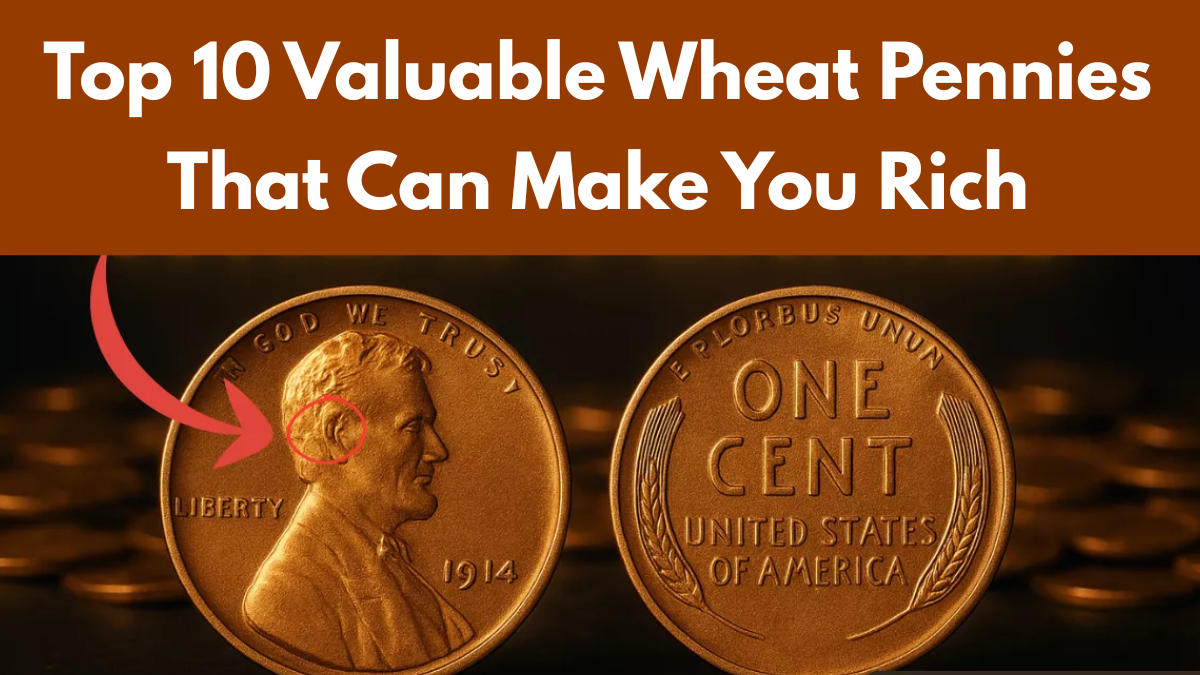
Wheat pennies—officially known as Lincoln Wheat Cents—are some of the most collected coins in American history. Minted from 1909 to 1958, these coins feature the iconic wheat stalks on the reverse and Abraham Lincoln on the front. While many wheat pennies are common and worth just a few cents, some rare dates, mint errors, and variations can be extremely valuable.
Collectors around the world hunt for these special coins, and certain wheat pennies have sold for tens of thousands—even hundreds of thousands of dollars. If you’re someone who enjoys coin collecting or simply wonders whether old pennies lying around could be worth a fortune, this guide will show you exactly which ones to look for.

Below is a complete breakdown of the top 10 most valuable wheat pennies, why they are rare, and how much they can be worth today.
Why Are Some Wheat Pennies So Valuable?
Wheat pennies gain value based on several factors:
1. Low Mintage
When fewer coins were made in a particular year or mint location, they naturally become rarer.
2. Minting Errors

Mistakes such as double dies, missing letters, or off-center strikes make a coin extremely desirable to collectors.
3. Historical Significance
Special editions—like the first year of issue (1909) or a coin with designer initials—hold strong collector appeal.
4. Condition (Grade)
Higher-grade coins with minimal wear can skyrocket in value. Even a common date in pristine condition can be worth hundreds.
Top 10 Valuable Wheat Pennies That Can Make You Rich

Below is the detailed table followed by descriptions of each rare penny.
| Rank | Wheat Penny | Key Feature / Reason for Value | Estimated Value (Depending on Grade) |
|---|---|---|---|
| 1 | 1909-S VDB | First edition with designer initials | $1,500 – $250,000 |
| 2 | 1943 Bronze Wheat Penny | Wrong metal error (should be steel) | $100,000 – $1,000,000+ |
| 3 | 1914-D Wheat Penny | Scarce low mintage from Denver | $250 – $50,000 |
| 4 | 1922 No-D Wheat Penny | Missing mint mark error | $500 – $30,000 |
| 5 | 1955 Double Die Wheat Penny | Clear doubling on date and letters | $1,000 – $50,000 |
| 6 | 1909-S Wheat Penny (No VDB) | First-year San Francisco mint coin | $100 – $3,000 |
| 7 | 1931-S Wheat Penny | One of the lowest mintages of the series | $75 – $4,500 |
| 8 | 1917 Double Die Obverse | Strong doubling on the date | $200 – $8,000 |
| 9 | 1924-D Wheat Penny | Limited surviving high-grade examples | $50 – $5,000 |
| 10 | 1944 Steel Wheat Penny | Another wrong-metal mint error | $20,000 – $100,000 |
Detailed Breakdown of Each Valuable Wheat Penny
1. 1909-S VDB Wheat Penny
The 1909-S VDB is one of the most famous and sought-after Lincoln cents. When the wheat penny series launched in 1909, the designer Victor David Brenner included his initials “VDB” on the reverse. Some felt the letters were too prominent, so the initials were removed, leaving only a small number of these coins in circulation.
Why It’s Valuable
- Very low mintage
- First-year design
- Highly popular among collectors
Potential Value
$1,500–$250,000 depending on condition.
2. 1943 Bronze Wheat Penny
During World War II, the U.S. Mint made pennies out of steel coated in zinc to save copper for the war. But a few bronze (copper) planchets mistakenly remained in the minting machines, leading to extremely rare 1943 bronze pennies.
Why It’s Valuable
- Major historical mint error
- One of the rarest U.S. coins ever found
Potential Value
$100,000 to over $1,000,000—these coins have sold for record-breaking prices.
3. 1914-D Wheat Penny
The 1914-D penny from the Denver Mint is rare because very few were made, and even fewer survive in good condition. It is one of the must-have pieces for advanced collections.
Why It’s Valuable
- Low mintage
- High wear from heavy circulation
- High demand among collectors
Potential Value
$250–$50,000
4. 1922 No-D Wheat Penny
This coin is unique because the Denver Mint was the only mint producing pennies in 1922. Due to overused dies, some coins were struck with no visible “D” mint mark, creating the famous “No-D” variety.
Why It’s Valuable
- True minting error
- Only date where a no-mint-mark penny does not mean Philadelphia Mint
Potential Value
$500–$30,000
5. 1955 Double Die Wheat Penny
One of the most dramatic and popular error coins ever made, the 1955 Double Die Obverse features obvious doubling on the date and lettering, visible to the naked eye.
Why It’s Valuable
- Strong doubling makes it easy to identify
- Very popular with collectors
- Scarce in high-grade condition
Potential Value
$1,000–$50,000
6. 1909-S Wheat Penny (No VDB)
After removing the designer’s initials, the San Francisco Mint continued striking pennies, resulting in the 1909-S No VDB, another key date of the series.
Why It’s Valuable
- First-year San Francisco mint coin
- Low mintage after VDB removal
Potential Value
$100–$3,000
7. 1931-S Wheat Penny
During the Great Depression, the U.S. Mint drastically reduced production, leading to one of the lowest mintage wheat pennies of all time.
Why It’s Valuable
- Only a small number produced
- Many were saved, but high-grade examples are valuable
Potential Value
$75–$4,500
8. 1917 Double Die Obverse Wheat Penny
This early double-die penny features strong doubling on the date and lettering, similar to the 1955 version but far rarer in high grades.
Why It’s Valuable
- Early dramatic double die
- Strong collector demand
Potential Value
$200–$8,000
9. 1924-D Wheat Penny
While not as rare as the 1914-D, the 1924-D cent is extremely difficult to find in top-grade condition due to poor strike quality and heavy circulation.
Why It’s Valuable
- Low survival rate in good condition
- Key date for collectors
Potential Value
$50–$5,000
10. 1944 Steel Wheat Penny
After switching back to copper in 1944, the Mint accidentally created a few steel pennies when leftover steel planchets from 1943 re-entered the production line.
Why It’s Valuable
- Rare “wrong metal” error
- Only a handful known
Potential Value
$20,000–$100,000
How to Tell If Your Wheat Penny Is Valuable
To determine whether your penny is worth big money, check for the following:
1. The Date and Mint Mark
Look under the date for:
- D (Denver)
- S (San Francisco)
- No mark (Philadelphia)
Certain dates immediately stand out as valuable.
2. Visible Errors
Check for:
- Doubling on letters
- Misaligned design
- Missing mint marks
- Unusual color or metal
3. Condition (The Higher, The Better)
Coin grades range from:
- Poor (P-1)
- Good (G-4)
- Fine (F-12)
- Extremely Fine (EF-40)
- Mint State (MS-60 to MS-70)
Even a small difference in grade can change value drastically.
4. Unusual Metal Composition
If a 1943 penny is copper, or a 1944 penny is steel, you may have found a treasure.
Where Can You Sell Valuable Wheat Pennies?
If you discover a rare penny, here are safe selling options:
- Certified coin dealers
- Online auction sites
- Numismatic exhibitions
- Local coin shows
- Professional grading services (for evaluation)
Always avoid selling without knowing the actual value—rare coins can easily be underpriced.
Final Thoughts
Wheat pennies remain one of the most exciting and rewarding areas of coin collecting. Whether you inherited a coin jar or actively search for rare coins, you might be holding a hidden treasure. The top 10 wheat pennies listed here are highly valuable not only for their rarity but also for their historical and collector appeal.
If you find any wheat penny from the years or types described above, it’s worth taking a closer look. Your one-cent coin could be worth thousands—or even a million dollars.