


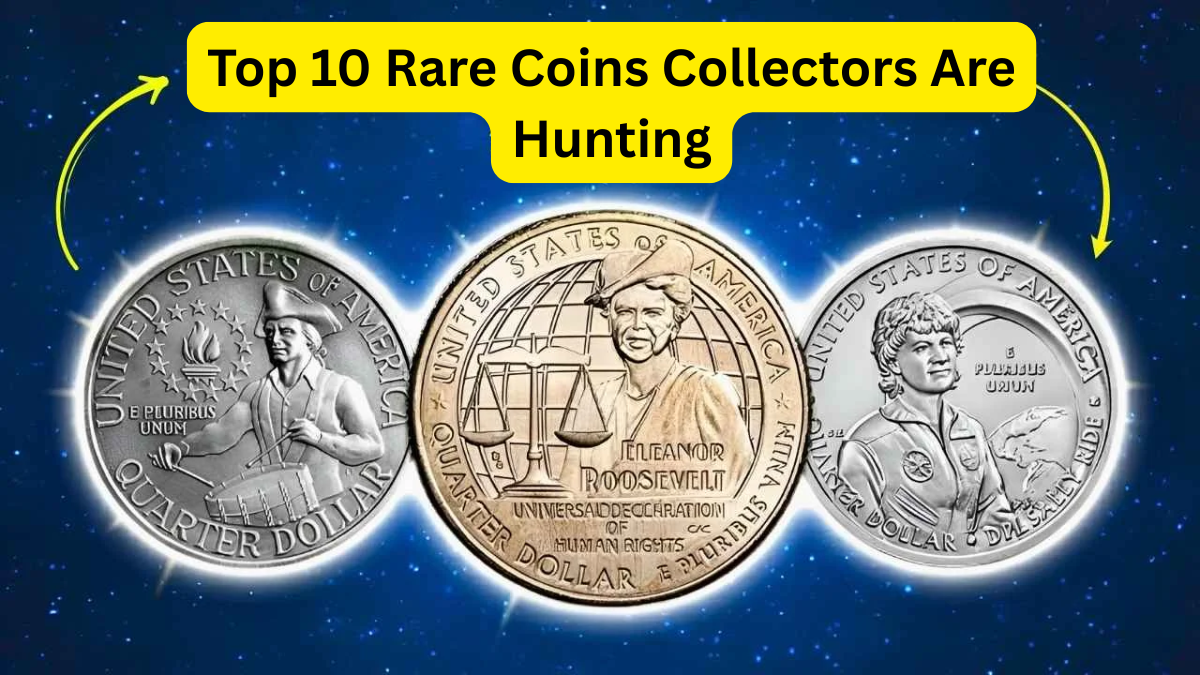
Coin collecting—also known as numismatics—is one of the world’s oldest and most fascinating hobbies. Rare coins represent a mix of history, scarcity, craftsmanship, and investment potential, which is why collectors across the globe compete to acquire them. Some coins are valuable because only a few exist, while others are treasured due to minting errors, unique metals, or connections to major historical events.
In this extensive guide, we explore the Top 10 rare coins collectors are hunting today, their estimated values, and the historical background that makes each one special.
Why Do Rare Coins Become Valuable?


Before diving into the list, it’s important to understand what drives coin values.
1. Scarcity
The fewer coins available, the higher the demand and value.
2. Condition & Grading
Coins in mint or near-mint condition receive higher grades and sell for significantly more.
3. Historical Importance

Coins linked to major events, rulers, or eras gain immense collector interest.
4. Metal Content
Gold, silver, and platinum coins often hold intrinsic value beyond rarity.
5. Minting Errors
Coins with printing errors, double strikes, or off-centers typically become highly valuable due to limited circulation.
Top 10 Rare Coins Collectors Are Hunting (With Values & History)

Below is a quick overview table followed by detailed descriptions.
Rare Coins Table (Summary)
| Rank | Rare Coin Name | Estimated Value | Key Feature |
|---|---|---|---|
| 1 | 1933 Saint-Gaudens Double Eagle | $18 million+ | Most valuable US coin ever sold |
| 2 | 1794 Flowing Hair Silver Dollar | $13 million | First silver dollar issued by the U.S. Mint |
| 3 | 1787 Brasher Doubloon | $9.3 million | First privately minted American gold coin |
| 4 | 1913 Liberty Head Nickel | $4.5 million | Only 5 known examples |
| 5 | 1804 Draped Bust Silver Dollar | $4.1 million | “King of American Coins” |
| 6 | 2007 $1 Million Canadian Gold Maple Leaf | $4 million | Purest and heaviest gold coin ever |
| 7 | 1343 Edward III Florin | $6.8 million | Medieval English coin of extreme rarity |
| 8 | 1894-S Barber Dime | $2 million | Only 24 minted, only 9 survive |
| 9 | 1969-S Lincoln Penny (Double Die) | $125,000 | Iconic modern mint error |
| 10 | 2000-P Sacagawea “Cheerios” Dollar | $15,000 | Rare prototype reverse design |
1. 1933 Saint-Gaudens Double Eagle
The 1933 Saint-Gaudens Double Eagle is widely considered the holy grail of rare coins. Although nearly half a million were minted, the U.S. government ordered all of them melted during the Great Depression when the country abandoned the gold standard.
Only a few escaped destruction, making this coin one of the rarest in existence.
Historical Background
- Designed by the legendary sculptor Augustus Saint-Gaudens.
- Never officially released for circulation.
- One specimen sold at auction for over $18 million, making it the most expensive coin ever sold.
Estimated Value: $18 million+
2. 1794 Flowing Hair Silver Dollar
The 1794 Flowing Hair Dollar is believed to be the first silver dollar minted by the United States. Its striking historical importance and extremely limited supply make it a top target for elite collectors.
Historical Background
- Depicts Lady Liberty with flowing hair and an American eagle on the reverse.
- Early U.S. minting techniques caused most surviving coins to be poorly struck.
- A superb specimen sold for more than $13 million.
Estimated Value: $13 million
3. 1787 Brasher Doubloon
Created by goldsmith Ephraim Brasher, the Brasher Doubloon is the earliest known American-made gold coin. It was privately minted because the United States had yet to establish an official gold coin system.
Historical Background
- Features a rising sun over mountains, symbolizing hope.
- Brasher’s initials “EB” are stamped into the wing of the eagle.
- Only a handful exist.
Estimated Value: $9.3 million
4. 1913 Liberty Head Nickel
Only five Liberty Head Nickels dated 1913 were ever made, and none were officially authorized by the U.S. Mint. Their mysterious creation adds to their appeal.
Historical Background
- Not part of the official mint schedule for 1913.
- Rediscovered by a collector in the 1920s.
- The coin is so rare that each known example has its own nickname.
Estimated Value: Up to $4.5 million
5. 1804 Draped Bust Silver Dollar
Known as the “King of American Coins”, the 1804 Draped Bust Dollar holds a legendary place in the collecting world.
Historical Background
- Surprisingly, these coins were minted in the 1830s, not 1804.
- They were produced as diplomatic gifts for international envoys.
- Fewer than 15 exist today.
Estimated Value: $4.1 million
6. 2007 $1 Million Canadian Gold Maple Leaf
This incredible coin weighs 100 kilograms of pure 99.999% gold. Originally minted as a showpiece, a few were later sold to private collectors.
Historical Background
- Largest and purest gold coin ever produced.
- Features Queen Elizabeth II and Canada’s iconic maple leaf.
- Attracts both coin collectors and bullion investors.
Estimated Value: $4 million (subject to gold price)
7. 1343 Edward III Florin
Also known as the “Double Leopard”, this English medieval coin is one of the oldest rare coins still surviving.
Historical Background
- Minted in 1343 during the reign of King Edward III.
- Only three specimens are known today.
- Represents a major historical era tied to European monarchies and warfare.
Estimated Value: $6.8 million
8. 1894-S Barber Dime
The 1894-S Barber Dime is among the rarest small-denomination U.S. coins. Only 24 were minted, and fewer than nine are known to exist today.
Historical Background
- Minted at the San Francisco Mint.
- One theory claims they were made as gifts for bankers.
- A nearly perfect example sold for about $2 million.
Estimated Value: $2 million
9. 1969-S Lincoln Penny (Double Die Error)
Minting errors create some of the most desirable modern rare coins. The 1969-S Doubled Die Penny is one of the most famous examples.
Historical Background
- The date and inscriptions show strong doubling.
- Only a small number entered circulation before being identified.
- Counterfeits exist, making authentication essential.
Estimated Value: Up to $125,000
10. 2000-P Sacagawea “Cheerios” Dollar
In 2000, the U.S. Mint partnered with a cereal brand for a promotion, placing limited Sacagawea dollars in special boxes. These coins featured a prototype eagle tail design, making them significantly different from the final version.
Historical Background
- Only 5,500 were distributed.
- The detailed tail feathers set it apart from normal Sacagawea dollars.
- Highly prized by modern coin collectors.
Estimated Value: $10,000–$15,000
How to Identify Valuable Coins
Finding a rare coin is exciting, but proper identification is crucial.
1. Check the Date and Mint Mark
Coins from certain years or mints can be extremely valuable.
2. Examine for Minting Errors
Double dies, off-centers, or wrong-planchet strikes increase value.
3. Determine the Grade
Professional grading services such as PCGS or NGC evaluate:
- Luster
- Wear
- Strike quality
- Surface marks
Higher grades can multiply value dramatically.
4. Consult a Reputable Dealer
Experienced dealers can verify authenticity and give accurate pricing.
Where Do Collectors Find Rare Coins?
1. Auctions
Top coins are sold at major auction houses with global bidders.
2. Coin Shows
Collectors and dealers gather to trade, buy, and exhibit items.
3. Online Marketplaces
Trusted platforms allow collectors to browse international listings.
4. Estate Sales
Many rare coins resurface when old collections are rediscovered.
Are Rare Coins a Good Investment?
Rare coins can be a great investment for several reasons:
✔ Strong Historical Value
Coins represent significant events and eras.
✔ Limited Supply
Rarity ensures long-term demand.
✔ Portable Wealth
Coins are easy to store and transport.
✔ Market Stability
Rare coins often remain valuable even during economic downturns.
However, like all investments, they require research and caution. Always buy from trustworthy sources and verify authenticity.
Final Thoughts
Rare coins are more than just collectibles—they are pieces of history, preserving stories of empires, leaders, and centuries of economic evolution. Whether you’re a beginner or a professional collector, understanding the rarity, history, and values of these coins can help you make smart collecting decisions.
From the 1933 Double Eagle to the Cheerios Dollar, each coin on this list represents a fascinating chapter in numismatic history. As interest in rare coins continues to grow, these treasures remain some of the most sought-after collectibles in the world.