
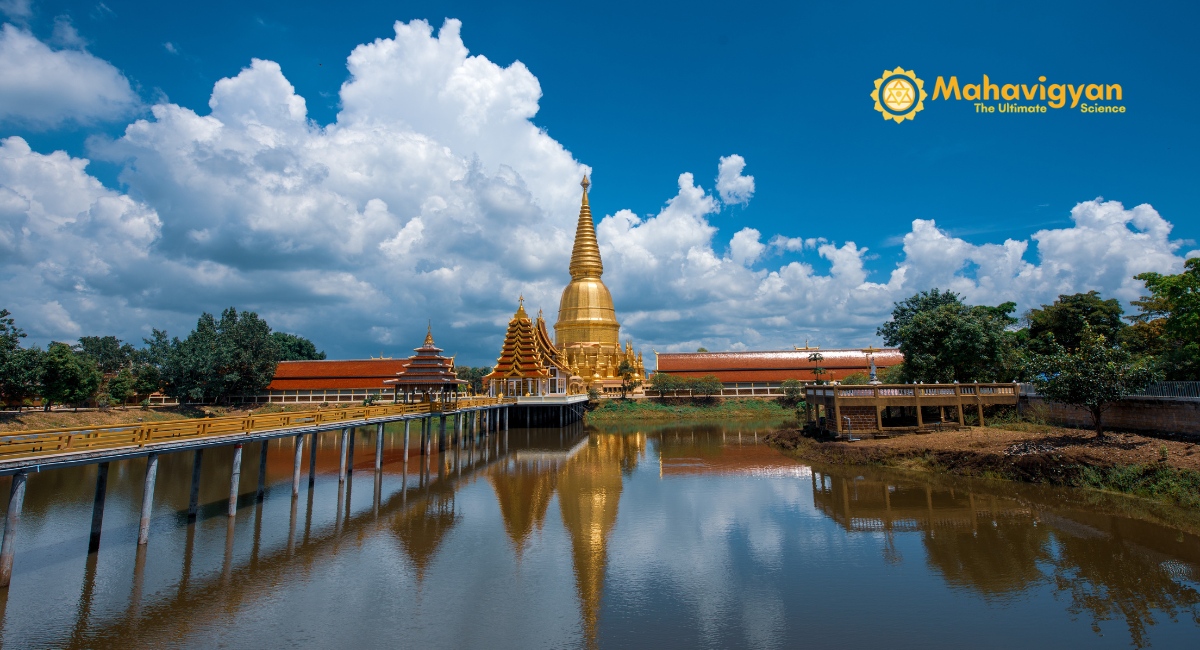
India, the land of spirituality and divine wisdom, holds within it many ancient places that connect humans to the roots of Sanatan Dharma. Among these sacred sites, Naimisharanya Chakra Teerth stands out as one of the holiest and most ancient pilgrimage destinations in Hinduism. Located on the banks of the Gomti River in Sitapur district of Uttar Pradesh, Naimisharanya is said to be the center of divine energy — a place where rishis performed yajnas, gods descended to bless devotees, and knowledge from the Vedas was revealed to mankind.
Known as the Tapobhumi of 88,000 sages, Naimisharanya is a teerth that holds both mythological significance and spiritual energy. Devotees believe that a visit to Naimisharanya can cleanse one’s sins and grant liberation (moksha). The Chakra Teerth, situated at the heart of Naimisharanya, is the central point that defines the spiritual importance of this sacred land.
The Legend Behind Naimisharanya
According to ancient scriptures like the Puranas, Mahabharata, and Skanda Purana, the origin of Naimisharanya dates back to the beginning of human civilization. The name “Naimisharanya” is derived from the Sanskrit word Nimisha, meaning “a moment.” It is believed that Lord Vishnu destroyed the demons in just a single moment (nimisha) at this place, making it a sacred ground forever.
Another popular legend states that when the great sages approached Lord Brahma and asked for a place on Earth where they could safely perform penance and yajnas, Lord Brahma threw a sacred wheel (chakra) into the sky and instructed them to settle where the wheel would land. The chakra fell on the land that is now known as Chakra Teerth in Naimisharanya. The center of that divine wheel became a pond with a self-rotating whirlpool, which is still visible today.
Significance of Chakra Teerth
The Chakra Teerth is the spiritual heart of Naimisharanya. It is said to be the central point of the Earth’s spiritual energy. The water in this sacred pond is believed to have divine properties that can wash away sins and purify the soul. Pilgrims from all over India come to take a holy dip in the Chakra Teerth before starting their religious rituals or visiting other temples in the area.

The constant whirlpool at the center of the Chakra Kund is a symbol of the eternal cycle of life — creation, preservation, and destruction. The Chakra never stops spinning, representing the continuous movement of cosmic energy that governs the universe.
According to the Skanda Purana, performing rituals and offering prayers at Chakra Teerth yields the same merit as performing a thousand Ashwamedha Yajnas. It is also believed that those who bathe here during special occasions like Amavasya, Purnima, and Ekadashi receive divine blessings from all gods.
Mythological References and Scriptural Importance
The greatness of Naimisharanya is mentioned in various sacred texts:
- In the Mahabharata, it is said that the entire epic was first recited by sage Vaishampayana to King Janamejaya at Naimisharanya.
- The Puranas mention that Lord Vishnu, Lord Shiva, and Goddess Parvati have all blessed this land with their divine presence.
- The Bhagavata Purana begins in Naimisharanya, where sages assembled to hear sage Suta Goswami narrate the glories of Lord Krishna.
- The place is also believed to be where Sage Narada received divine instructions from Lord Vishnu, making it a symbol of wisdom and enlightenment.

Thus, Naimisharanya stands not only as a geographical location but as a spiritual hub where divine knowledge was shared for the welfare of humanity.
Temples and Sacred Sites in Naimisharanya
Naimisharanya is home to many ancient temples and shrines, each carrying deep mythological roots. Some of the most revered among them are:
1. Chakra Teerth
The main attraction of Naimisharanya, this circular pond is said to mark the exact spot where Lord Brahma’s chakra landed. Devotees perform parikrama around it and take a dip in its sacred waters to attain purification.
2. Lalita Devi Temple
One of the 51 Shakti Peethas, this temple is dedicated to Goddess Lalita Devi, a form of Goddess Parvati. According to legend, the heart of Goddess Sati fell here after Lord Shiva performed the Tandava with her body. Worship at this temple is considered equivalent to visiting all other Shakti Peeths.
3. Hanuman Garhi
Situated near the Chakra Teerth, Hanuman Garhi is a temple devoted to Lord Hanuman. Devotees believe that visiting this temple removes obstacles and grants courage, just like Hanuman’s blessings protected Lord Rama.
4. Vyasa Gaddi
This sacred seat is where Sage Ved Vyasa is believed to have composed the Mahabharata and compiled the Vedas. Pilgrims meditate here to seek knowledge and wisdom.
5. Dadhichi Kund
The site is associated with the great sage Dadhichi, who sacrificed his body to give his bones for the creation of the Vajra weapon used by Indra to slay the demon Vritra. Taking a holy bath here is said to bestow immense merit.
6. Sita Kund and Dashashwamedha Ghat
It is believed that Lord Rama performed ten Ashwamedha Yajnas here, hence the name Dashashwamedha Ghat. The Sita Kund nearby is associated with Goddess Sita, who bathed here during her exile.
Spiritual Experience at Naimisharanya
The spiritual energy of Naimisharanya cannot be expressed merely in words — it is something that must be experienced. The moment a devotee steps onto this sacred land, they feel an inner calmness and peace. The chants of mantras, the ringing temple bells, and the soft flow of the Gomti River create an atmosphere of divine connection.
Meditation at Chakra Teerth is believed to enhance concentration and awaken spiritual consciousness. Many saints and sadhus still live and meditate in the forests around Naimisharanya, continuing the ancient tradition of penance and devotion.
Festivals and Rituals
Throughout the year, Naimisharanya hosts many religious events that attract thousands of devotees:
- Makar Sankranti: Devotees take a holy dip in Chakra Teerth to mark the beginning of the new spiritual year.
- Navratri: The Lalita Devi Temple becomes the focal point of devotion, with nine days of prayers, fasting, and cultural celebrations.
- Kartik Purnima: This is one of the most auspicious occasions when pilgrims come from far and wide to bathe in the Chakra Kund.
- Guru Purnima: The day is dedicated to honoring spiritual teachers, and sages’ seats like Vyasa Gaddi become centers of prayer and gratitude.
Best Time to Visit Naimisharanya
While devotees visit Naimisharanya throughout the year, the best time to plan a pilgrimage is between October and March, when the weather is cool and pleasant. During festivals like Kartik Purnima or Navratri, the town is adorned with lights and flowers, and the energy of devotion fills the air.
For those seeking a quiet spiritual retreat, the early morning hours are ideal for meditation near the Chakra Teerth or along the banks of the Gomti River.
How to Reach Naimisharanya Chakra Teerth
- By Road: Naimisharanya is well-connected by road from Lucknow (around 95 km) and Sitapur (35 km). Regular buses and taxis are available.
- By Train: The nearest railway station is Sitapur or Sandila, from where one can easily reach Naimisharanya by taxi or local transport.
- By Air: The nearest airport is Chaudhary Charan Singh International Airport, Lucknow, which is about 110 km away.
Accommodation and Facilities
Naimisharanya offers a range of accommodations — from ashrams and dharamshalas for spiritual seekers to budget hotels for tourists. Many temples provide free lodging and community meals (bhandara) for pilgrims. It is advisable to book rooms in advance during major festivals.
For a deeper spiritual experience, one can stay at traditional ashrams like Vyasa Ashram, Suta Gaddi, or Naimisha Veda Peeth, where daily prayers and meditation sessions are held.
Spiritual Importance in the Modern Era
In today’s fast-paced world, where people are constantly searching for peace and purpose, Naimisharanya serves as a timeless reminder of inner balance and divine connection. Visiting Chakra Teerth is not just a religious act — it’s a journey toward self-realization.
The tranquil surroundings, ancient temples, and holy water inspire visitors to reconnect with their higher consciousness. It is believed that even spending a few hours in this sacred land can purify one’s thoughts and bring mental clarity.
Modern pilgrims often describe Naimisharanya as a “spiritual power center”, where one can feel both grounded and uplifted at the same time. The energy of countless sages who meditated here still resonates in the atmosphere, guiding devotees toward truth and enlightenment.
Conclusion
Naimisharanya Chakra Teerth is not merely a pilgrimage destination — it is a divine experience that bridges the gap between the human and the cosmic. From the legends of Brahma’s chakra to the eternal whirlpool symbolizing creation and dissolution, every aspect of this sacred land reflects the depth of Sanatan philosophy.
A visit to Naimisharanya is a journey through history, faith, and self-discovery. It reminds us that spirituality is not bound by rituals alone but by awareness, devotion, and the pursuit of eternal knowledge. Whether you are a believer, a seeker, or simply a lover of ancient culture, Naimisharanya Chakra Teerth welcomes you with open arms — to cleanse your soul, enlighten your mind, and awaken your inner divinity.