


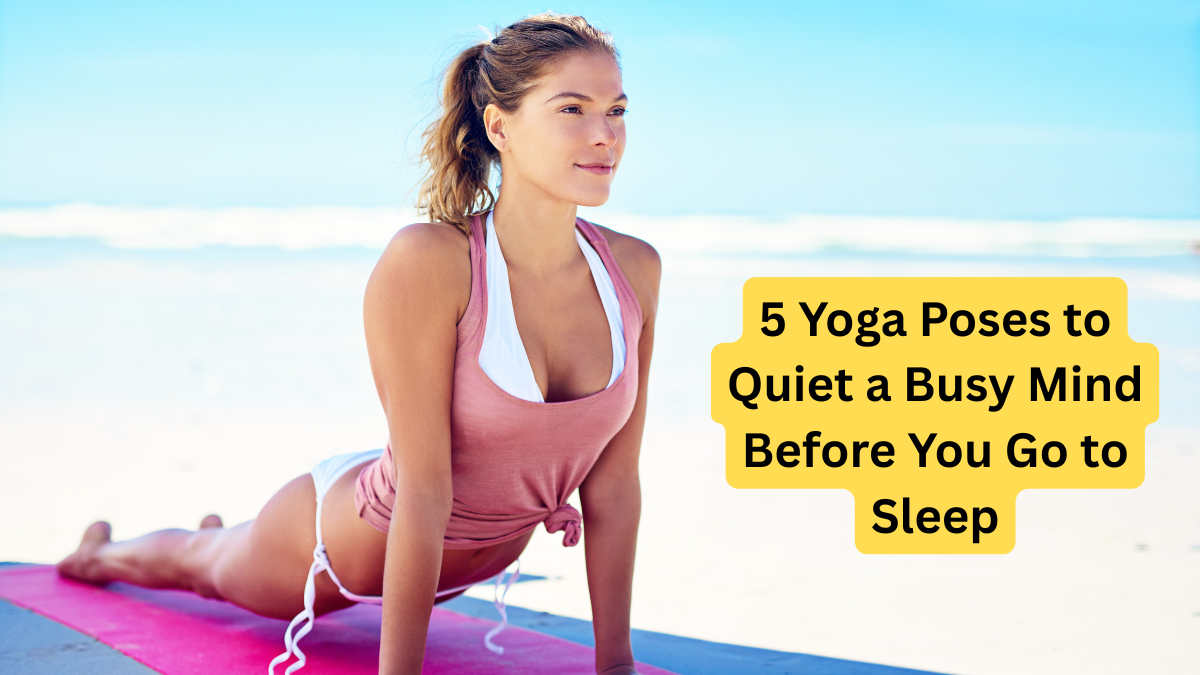
In today’s fast-paced world, falling asleep can feel harder than ever. Even when the body is tired, the mind often refuses to slow down. Thoughts about work, studies, family, social media, or tomorrow’s to-do list can keep looping endlessly. This mental restlessness is one of the biggest reasons people struggle with poor sleep quality.
Yoga offers a gentle, natural solution. Unlike intense workouts, bedtime yoga focuses on calming the nervous system, releasing tension, and guiding the mind into a peaceful state. Practiced consistently, a few simple yoga poses before bed can help you transition smoothly from wakefulness to rest.

This article explores 5 yoga poses to quiet a busy mind before you go to sleep, explaining how they work, how to practice them safely, and why they are effective for better sleep. Whether you are a beginner or someone familiar with yoga, these poses are easy, soothing, and deeply restorative.
Why the Mind Feels Busy at Night
Before diving into the poses, it’s important to understand why mental chatter becomes louder at bedtime.
1. Reduced Distractions
During the day, the mind is occupied with tasks and conversations. At night, when external stimulation stops, unresolved thoughts rise to the surface.
2. Stress Accumulation
Stress hormones often remain elevated even after the day ends, making it difficult to relax.
3. Screen Exposure
Phones and screens overstimulate the brain and delay the natural sleep cycle.
4. Lack of Physical Release
Mental stress often manifests as tight shoulders, hips, and back, keeping the nervous system alert.
Yoga addresses all these issues by combining movement, breath, and awareness, which signals the body that it is safe to rest.
How Yoga Helps You Sleep Better
Yoga supports sleep in multiple ways:
- Slows the heart rate and breathing
- Activates the parasympathetic (relaxation) nervous system
- Releases muscular tension stored in the body
- Improves oxygen flow to the brain
- Encourages mindfulness and mental clarity
When practiced before bed, yoga becomes a bridge between the busy day and deep sleep.
Best Time and Environment for Bedtime Yoga
To get the maximum benefit:
- Practice 20–30 minutes before sleeping
- Keep lights dim
- Avoid mirrors or distractions
- Wear loose, comfortable clothing
- Breathe slowly and deeply
- Focus inward, not on perfect alignment
Table: Overview of Yoga Poses for Sleep
| Yoga Pose | Primary Benefit | Time to Hold | Best For |
|---|---|---|---|
| Child’s Pose | Mental calm, grounding | 1–3 minutes | Anxiety, overthinking |
| Seated Forward Bend | Nervous system relaxation | 1–2 minutes | Mental fatigue |
| Legs Up the Wall | Stress relief, circulation | 2–5 minutes | Insomnia, tired legs |
| Reclining Bound Angle | Emotional release | 3–5 minutes | Stress, restlessness |
| Corpse Pose with Breath | Deep mental quiet | 5–10 minutes | Sleep preparation |
1. Child’s Pose (Balasana)
Why This Pose Calms the Mind
Child’s Pose is deeply grounding and comforting. It encourages introspection and gently stretches the back, hips, and shoulders—areas where stress commonly accumulates. The forward-folding nature of this pose sends a signal of safety to the brain, helping mental chatter fade.
How to Practice
- Kneel on the floor or mat
- Sit back on your heels
- Fold forward, resting your chest on your thighs
- Extend your arms forward or place them alongside your body
- Rest your forehead on the mat or a cushion
Breathing Technique
- Inhale slowly through the nose
- Exhale longer than the inhale
- Feel the breath expand your back ribs
Mental Focus
Let go of expectations. Imagine each exhale washing away thoughts from the day.
How Long to Hold
Stay in the pose for 1 to 3 minutes, breathing slowly.
2. Seated Forward Bend (Paschimottanasana)
Why This Pose Is Effective Before Sleep
This pose gently compresses the abdomen and stimulates the nervous system to slow down. Forward bends are known for their calming effect, helping reduce anxiety and mental overstimulation.
How to Practice
- Sit with legs extended straight in front of you
- Inhale and lengthen your spine
- Exhale and fold forward from the hips
- Reach for your shins, ankles, or feet
- Keep the spine relaxed, not forced
Breathing Technique
- Breathe deeply into the belly
- Let each exhale deepen the fold naturally
Mental Focus
Allow thoughts to pass without engagement. Focus only on breath and sensation.
How Long to Hold
Hold for 1 to 2 minutes in a relaxed, supported manner.
3. Legs Up the Wall (Viparita Karani)
Why This Pose Quietens Mental Noise
Legs Up the Wall is one of the most powerful poses for relaxation. It reverses blood flow, calms the nervous system, and reduces fatigue. This pose is especially helpful if your mind races at night.
How to Practice
- Sit sideways next to a wall
- Swing your legs up while lying down
- Rest your hips close to the wall
- Arms relaxed by your sides
- Close your eyes
Breathing Technique
- Slow, rhythmic breathing
- Inhale for 4 counts, exhale for 6 counts
Mental Focus
Visualize your thoughts draining down your legs and into the ground.
How Long to Hold
Remain for 2 to 5 minutes or longer if comfortable.
4. Reclining Bound Angle Pose (Supta Baddha Konasana)
Why This Pose Soothes Emotional Stress
This pose opens the hips and chest, areas linked to emotional tension. It promotes vulnerability, release, and deep rest—ideal for calming a restless mind.
How to Practice
- Lie on your back
- Bring the soles of your feet together
- Let knees fall open naturally
- Support knees with cushions if needed
- Place one hand on chest, one on belly
Breathing Technique
- Breathe into the heart and belly
- Slow, soft, and steady
Mental Focus
Let emotions surface and dissolve without judgment.
How Long to Hold
Stay for 3 to 5 minutes.
5. Corpse Pose with Conscious Breathing (Savasana)
Why This Pose Is Essential for Sleep
Savasana is the final relaxation pose that integrates the benefits of the entire practice. When paired with conscious breathing, it prepares the body and mind for sleep.
How to Practice
- Lie flat on your back
- Legs slightly apart, arms relaxed
- Palms facing upward
- Close your eyes gently
Breathing Technique
- Inhale slowly
- Exhale fully and deeply
- Count breaths if the mind wanders
Mental Focus
Scan your body from head to toe, releasing tension from each area.
How Long to Hold
Remain for 5 to 10 minutes, or until you feel deeply relaxed.
Creating a Nightly Yoga Routine
You don’t need to practice all five poses every night. Even 10–15 minutes can make a difference.
Sample 20-Minute Routine
- Child’s Pose – 2 minutes
- Seated Forward Bend – 2 minutes
- Legs Up the Wall – 5 minutes
- Reclining Bound Angle – 4 minutes
- Corpse Pose – 7 minutes
Consistency matters more than duration.
Common Mistakes to Avoid
- Practicing too vigorously before bed
- Holding the breath
- Forcing stretches
- Using bright lights
- Checking phone immediately after practice
Yoga for sleep should feel gentle, slow, and nourishing.
Who Can Practice These Poses
These poses are suitable for:
- Beginners
- Students
- Working professionals
- Seniors
- Anyone experiencing mental fatigue
Always move within your comfort range.
Final Thoughts
A busy mind does not mean something is wrong—it simply means the mind has not been guided into rest. Yoga offers a compassionate way to slow down, breathe deeply, and reconnect with the present moment.
By practicing these 5 yoga poses to quiet a busy mind before you go to sleep, you create a nightly ritual that signals your body and mind that it is time to rest. Over time, this gentle practice can improve sleep quality, reduce stress, and bring a deeper sense of calm into your life.
Sleep is not something to force—it is something to invite. Yoga helps open the door.