


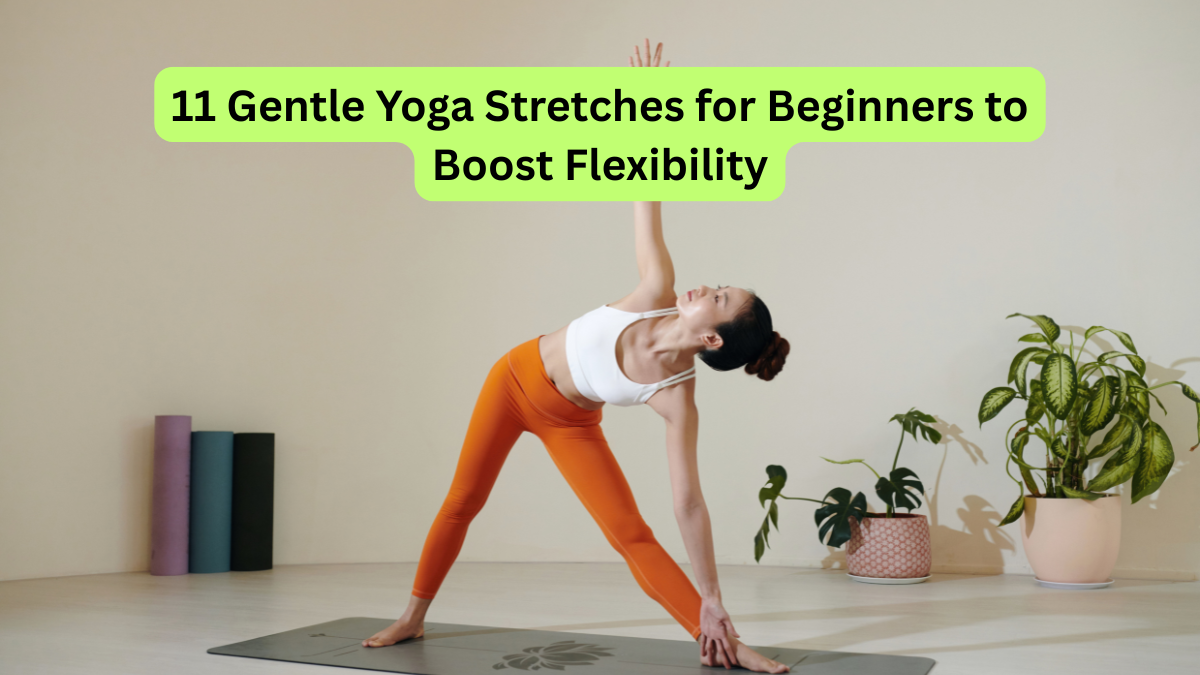
Flexibility is not about touching your toes on the first day or twisting your body into complex shapes. It is about moving comfortably, reducing stiffness, and improving overall body balance over time. Yoga is one of the safest and most effective ways for beginners to build flexibility gently, without putting stress on joints or muscles.
For beginners, gentle yoga stretches are especially helpful because they allow the body to open up slowly. These stretches focus on breathing, posture, and mindful movement, which makes them suitable for people of all ages and fitness levels.

In this article, you’ll learn 11 gentle yoga stretches for beginners that are easy to practice at home and highly effective for improving flexibility. Whether you are stiff from sitting all day, recovering from inactivity, or simply want to feel more relaxed, these poses will help you move better and feel lighter in your body.
Why Flexibility Matters for Beginners
Flexibility is often overlooked, but it plays a crucial role in daily life. Poor flexibility can lead to muscle tightness, joint pain, bad posture, and limited movement. Gentle yoga stretches help reverse these issues naturally.
Benefits of Gentle Yoga Stretches
- Improves joint mobility
- Reduces muscle stiffness
- Enhances posture and alignment
- Lowers stress and tension
- Improves blood circulation
- Makes daily movements easier
Unlike intense workouts, gentle yoga focuses on slow, controlled movements, making it ideal for beginners who want safe and sustainable results.
How to Practice Yoga Safely as a Beginner

Before starting, keep these simple tips in mind:
- Always warm up your body
- Never force a stretch
- Breathe deeply and slowly
- Hold poses comfortably, not painfully
- Use props like cushions or blocks if needed
- Practice on a yoga mat or soft surface
Consistency is more important than intensity. Even 10–20 minutes a day can lead to noticeable improvements in flexibility.
Table: Overview of 11 Gentle Yoga Stretches for Beginners
| No. | Yoga Stretch Name | Main Body Area Targeted | Difficulty Level | Recommended Hold Time |
|---|---|---|---|---|
| 1 | Mountain Pose | Full body | Very Easy | 30–60 seconds |
| 2 | Neck Stretch | Neck & shoulders | Very Easy | 20–30 seconds |
| 3 | Cat-Cow Stretch | Spine | Easy | 1–2 minutes |
| 4 | Seated Forward Bend | Hamstrings & back | Easy | 30–60 seconds |
| 5 | Butterfly Pose | Hips & thighs | Easy | 1 minute |
| 6 | Child’s Pose | Back & hips | Very Easy | 1–2 minutes |
| 7 | Cobra Pose | Spine & chest | Easy | 20–40 seconds |
| 8 | Standing Side Stretch | Side body | Easy | 20–30 seconds |
| 9 | Supine Spinal Twist | Spine & lower back | Easy | 30–60 seconds |
| 10 | Legs Up the Wall | Legs & lower back | Very Easy | 2–5 minutes |
| 11 | Corpse Pose | Full body relaxation | Very Easy | 5 minutes |
1. Mountain Pose (Tadasana)
Mountain Pose may look simple, but it is the foundation of many yoga postures. It helps align the body and improve posture while gently stretching the spine.
How to Do It:
- Stand tall with feet hip-width apart
- Keep arms relaxed by your sides
- Lengthen your spine and roll shoulders back
- Breathe deeply and evenly
Flexibility Benefits:
- Improves posture
- Engages core muscles
- Creates body awareness
2. Gentle Neck Stretch
This stretch releases tension stored in the neck and shoulders, especially useful for people who work on computers or use mobile phones frequently.
How to Do It:
- Sit or stand comfortably
- Slowly tilt your head to one side
- Hold and breathe, then switch sides
- Avoid bouncing or forcing the stretch
Flexibility Benefits:
- Reduces neck stiffness
- Improves range of motion
- Relieves headaches
3. Cat-Cow Stretch
Cat-Cow is a gentle spinal movement that improves flexibility in the back and neck while coordinating breath with movement.
How to Do It:
- Come onto hands and knees
- Inhale, arch your back (Cow)
- Exhale, round your spine (Cat)
- Move slowly with your breath
Flexibility Benefits:
- Increases spinal mobility
- Reduces back stiffness
- Improves posture
4. Seated Forward Bend
This pose gently stretches the hamstrings and lower back, which are often tight in beginners.
How to Do It:
- Sit with legs extended forward
- Inhale, lengthen your spine
- Exhale, bend forward from hips
- Keep your back straight
Flexibility Benefits:
- Lengthens hamstrings
- Improves spinal flexibility
- Calms the nervous system
5. Butterfly Pose
Butterfly Pose is excellent for opening tight hips and inner thighs, areas that commonly hold stiffness.
How to Do It:
- Sit and bring soles of feet together
- Hold your feet and sit tall
- Gently move knees toward the floor
- Breathe deeply
Flexibility Benefits:
- Improves hip flexibility
- Reduces lower body stiffness
- Enhances blood flow
6. Child’s Pose
Child’s Pose is a deeply relaxing stretch that gently lengthens the spine and hips.
How to Do It:
- Kneel on the floor
- Sit back on heels
- Stretch arms forward and rest forehead down
- Relax completely
Flexibility Benefits:
- Releases lower back tension
- Stretches hips and thighs
- Promotes relaxation
7. Cobra Pose
Cobra Pose gently stretches the front of the body and strengthens the spine, making it ideal for beginners.
How to Do It:
- Lie on your stomach
- Place hands under shoulders
- Lift chest gently while keeping hips grounded
- Do not lock elbows
Flexibility Benefits:
- Improves spinal extension
- Opens chest and shoulders
- Reduces stiffness from sitting
8. Standing Side Stretch
This pose targets the sides of the body, which are often ignored but essential for full flexibility.
How to Do It:
- Stand with feet apart
- Raise one arm overhead
- Gently bend to the opposite side
- Switch sides
Flexibility Benefits:
- Stretches side muscles
- Improves balance
- Enhances breathing capacity
9. Supine Spinal Twist
This gentle twist improves spinal mobility and releases lower back tension.
How to Do It:
- Lie on your back
- Bring one knee toward chest
- Gently twist it across your body
- Keep shoulders relaxed
Flexibility Benefits:
- Improves spinal rotation
- Relieves back stiffness
- Aids digestion
10. Legs Up the Wall
This restorative pose is excellent for beginners who want flexibility without effort.
How to Do It:
- Lie on your back near a wall
- Lift legs straight up against the wall
- Relax arms by your sides
- Close your eyes and breathe
Flexibility Benefits:
- Stretches hamstrings gently
- Reduces leg fatigue
- Improves circulation
11. Corpse Pose (Savasana)
Corpse Pose may seem simple, but it allows the body to absorb all the benefits of stretching.
How to Do It:
- Lie flat on your back
- Relax arms and legs
- Close eyes and breathe naturally
- Stay still and calm
Flexibility Benefits:
- Releases muscle tension
- Improves body awareness
- Promotes deep relaxation
How Often Should Beginners Practice These Stretches?
For best results:
- Practice 3–5 times per week
- Hold each stretch comfortably
- Focus on breathing, not depth
- Increase duration gradually
Consistency will naturally lead to improved flexibility within a few weeks.
Common Mistakes Beginners Should Avoid
- Forcing stretches too deeply
- Holding breath during poses
- Skipping warm-up
- Comparing progress with others
- Ignoring pain signals
Yoga is a personal journey. Progress happens at your own pace.
Conclusion
Gentle yoga stretches are one of the safest and most effective ways for beginners to improve flexibility. These 11 beginner-friendly yoga stretches help release stiffness, improve mobility, and promote relaxation without overwhelming the body.
By practicing regularly and mindfully, you’ll notice smoother movements, better posture, and a calmer mind. Flexibility is not achieved overnight, but with patience and consistency, yoga can transform how your body feels and moves.