


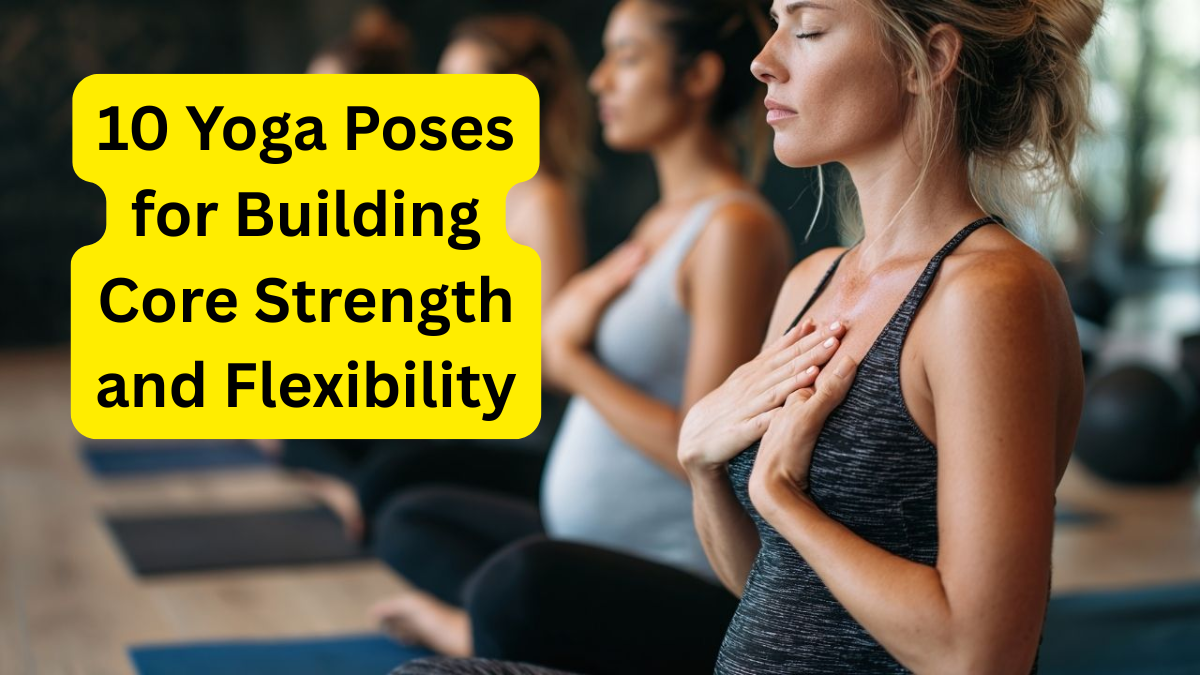
Building a strong core isn’t just about six-pack abs—it’s about stability, posture, balance, and injury prevention. Yoga is one of the most effective and sustainable ways to develop core strength and flexibility together, because it works deep stabilizing muscles while lengthening tight areas at the same time.
In this in-depth guide, you’ll discover 10 powerful yoga poses that activate your abdominal muscles, strengthen your back and hips, and improve overall flexibility. Whether you’re a beginner or an advanced practitioner, these poses can be adapted to your level and practiced safely at home.
Why Core Strength and Flexibility Matter

Your core includes the abdominal muscles, lower back, hips, and pelvis. A weak core often leads to poor posture, lower back pain, reduced athletic performance, and limited mobility. Flexibility, on the other hand, allows your muscles and joints to move freely, reducing stiffness and injury risk.
Yoga uniquely combines:
- Isometric holds for strength
- Controlled movement for muscle engagement
- Deep stretching for flexibility
- Breath awareness for better muscle activation
Practicing core-focused yoga regularly improves balance, coordination, digestion, spinal health, and even mental focus.
Quick Overview: Yoga Poses for Core Strength & Flexibility
| No. | Yoga Pose Name | Core Focus | Flexibility Benefit | Difficulty |
|---|---|---|---|---|
| 1 | Plank Pose | Abs, shoulders | Spine, calves | Beginner |
| 2 | Boat Pose | Deep abs, hip flexors | Hamstrings | Intermediate |
| 3 | Downward Dog | Core stability | Hamstrings, shoulders | Beginner |
| 4 | Warrior III | Core balance | Hips, legs | Intermediate |
| 5 | Side Plank | Obliques | Side body | Intermediate |
| 6 | Bridge Pose | Lower core, glutes | Spine, chest | Beginner |
| 7 | Forearm Plank | Transverse abs | Shoulders | Intermediate |
| 8 | Cobra Pose | Back core muscles | Spine, abdomen | Beginner |
| 9 | Chair Twist | Obliques | Spine, hips | Intermediate |
| 10 | Locust Pose | Lower back, glutes | Chest, shoulders | Beginner |
1. Plank Pose (Phalakasana)
Plank Pose is one of the most effective yoga postures for full core activation. It strengthens the abdominal muscles, shoulders, arms, and lower back simultaneously.
How it helps:
Holding the body in a straight line forces your core to engage continuously, improving endurance and stability.
How to practice:
- Start in a push-up position
- Keep shoulders over wrists
- Engage abs and glutes
- Hold for 20–60 seconds
Flexibility bonus: Stretches calves and lengthens the spine.
2. Boat Pose (Navasana)
Boat Pose targets the deep abdominal muscles that support posture and balance.
How it helps:
It challenges your core by lifting both legs and torso against gravity.
How to practice:
- Sit with legs extended
- Lift legs and torso
- Balance on sitting bones
- Extend arms forward
Flexibility bonus: Improves hamstring and hip flexibility.
3. Downward Facing Dog (Adho Mukha Svanasana)
This foundational pose builds core stability while stretching the entire body.
How it helps:
Although it looks like a stretch, the core works to stabilize the spine and pelvis.
How to practice:
- Hands and feet on the mat
- Hips lifted upward
- Spine long, heels reaching down
Flexibility bonus: Deep stretch for hamstrings, shoulders, and calves.
4. Warrior III (Virabhadrasana III)
Warrior III is a powerful balancing pose that demands strong core control.
How it helps:
Balancing on one leg activates the core to prevent tipping or twisting.
How to practice:
- Shift weight to one leg
- Extend the other leg back
- Keep torso parallel to the floor
Flexibility bonus: Opens hips and stretches the standing leg.
5. Side Plank (Vasisthasana)
Side Plank is excellent for strengthening the oblique muscles, which support spinal rotation.
How it helps:
It targets lateral core muscles often neglected in workouts.
How to practice:
- Start in plank
- Shift weight to one hand
- Stack feet and lift hips
Flexibility bonus: Lengthens side body and shoulders.
6. Bridge Pose (Setu Bandhasana)
Bridge Pose strengthens the lower core and glutes while opening the chest.
How it helps:
Engaging the core protects the lower back during spinal extension.
How to practice:
- Lie on your back
- Bend knees, feet hip-width
- Lift hips upward
Flexibility bonus: Improves spinal and hip flexibility.
7. Forearm Plank (Makara Adho Mukha Svanasana)
This variation increases core intensity while reducing wrist strain.
How it helps:
It deeply activates the transverse abdominis, the body’s natural corset.
How to practice:
- Forearms on the mat
- Elbows under shoulders
- Keep body straight
Flexibility bonus: Strengthens shoulders and improves posture.
8. Cobra Pose (Bhujangasana)
Cobra Pose strengthens the back core muscles and supports spinal health.
How it helps:
A strong back core balances the front abdominal muscles.
How to practice:
- Lie on stomach
- Hands under shoulders
- Lift chest gently
Flexibility bonus: Stretches abdomen and opens the chest.
9. Chair Pose with Twist (Parivrtta Utkatasana)
This pose combines core strength, balance, and rotation.
How it helps:
Twisting engages obliques and improves digestion.
How to practice:
- Sit into Chair Pose
- Bring palms together
- Twist torso to one side
Flexibility bonus: Improves spinal mobility and hip flexibility.
10. Locust Pose (Salabhasana)
Locust Pose targets the lower back and glutes, essential for a stable core.
How it helps:
It counteracts prolonged sitting and strengthens posterior muscles.
How to practice:
- Lie face down
- Lift chest, arms, and legs
- Keep neck neutral
Flexibility bonus: Opens chest and shoulders.
How Often Should You Practice These Poses?
For best results:
- Practice 3–5 times per week
- Hold strength poses for 20–60 seconds
- Combine with slow, controlled breathing
- End sessions with gentle stretches or relaxation
Consistency matters more than intensity. Even 20 minutes a day can lead to visible improvements in posture, strength, and flexibility within a few weeks.
Final Thoughts
Yoga offers a balanced, holistic approach to building core strength and flexibility. Unlike high-impact workouts, yoga strengthens muscles gently while keeping joints safe and mobile. These 10 poses, when practiced regularly, can help you develop a resilient core, improved balance, better posture, and a calmer mind.
Whether your goal is fitness, injury prevention, or overall wellness, integrating these yoga poses into your routine is a powerful step toward a healthier body.